
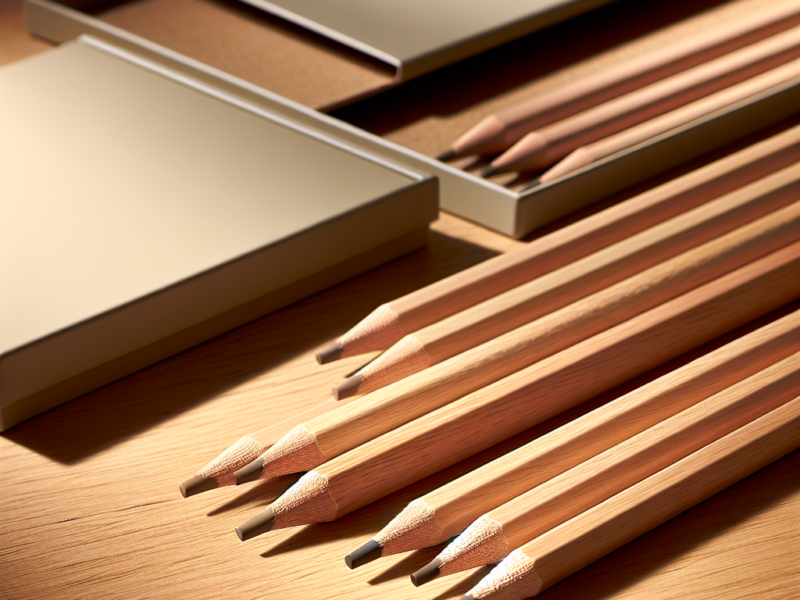
Whether you’re jotting down notes in a classroom or sketching diagrams in a meeting, the pencil you use plays a bigger role than you might think. While many people focus on lead grade or grip comfort, one crucial but often overlooked factor is pencil length. In both school and office environments, the length of a pencil can directly affect writing comfort, accuracy, and even productivity.
This article explores how and why pencil length matters in educational and professional settings, drawing from ergonomic studies, user preferences, and design principles. If you’re a student, teacher, designer, or office professional, understanding this subtle design feature can help you make smarter tool choices for better performance.
The Role of Pencil Length in Everyday Use
At first glance, pencil length may seem like a minor detail. But in practice, it influences how a pencil feels in your hand, how long it lasts, and how well it performs under different tasks. A standard wooden pencil starts out around 7.5 inches (190 mm) long, but variations exist for specific purposes.
In schools, students often use pencils for long writing sessions, which means comfort and durability are key. In offices, professionals may require precision and control for technical tasks like drafting or annotating documents. In both cases, the length of the pencil plays a functional role.
Ergonomics: Why Length Affects Comfort and Fatigue
One of the main reasons pencil length school office choices matter is ergonomics. A pencil that’s too short can force your fingers into cramped positions, increasing strain over time. Conversely, a pencil that’s too long may feel unbalanced or awkward, especially in fast-paced writing situations.
According to a study on large pencil ergonomics, thicker and longer pencils can reduce hand fatigue significantly. The added length contributes to a better grip angle and more natural wrist posture, which is particularly beneficial for students who write for hours or office workers who annotate documents all day.
Control and Precision: The Grip-to-Tip Factor
Another critical aspect is what’s known as the “grip-to-tip” length — the distance between where your fingers hold the pencil and the writing point. This dimension affects control, especially in tasks requiring precision.
As discussed in the Reddit article “Grip-to-Tip Length: The Factor of Pencils That’s Seldom Discussed”, a shorter grip-to-tip distance allows for tighter control, which is ideal for detailed work like technical drawing or underlining text. A longer grip-to-tip can feel less stable but may be preferred for expressive writing or sketching.
Choosing a pencil with the right grip-to-tip length — which is directly influenced by overall pencil length — can enhance your productivity and accuracy in both school and office settings.
Durability and Usability Over Time
Another practical reason to consider pencil length is longevity. A longer pencil simply lasts longer. In classroom settings, where supplies are shared or limited, a longer pencil means fewer interruptions and replacements.
In offices, where professionals may rely on a single pencil for days or weeks, a longer pencil ensures consistent performance. Additionally, longer pencils offer more sharpening cycles, making them more economical over time.
| Pencil Type | Length (inches) | Best For | Pros | Cons |
|---|---|---|---|---|
| Short (under 5″) | 3.5–5.0 | Quick notes, travel use | Portable, lightweight | Less control, tires hand faster |
| Standard | 7.0–7.5 | General school and office tasks | Balanced, widely available | May wear down quickly |
| Extra Long | 8.0+ | Extended writing, drawing | Longer lifespan, ergonomic | Less portable, may not fit in cases |
Classroom Applications: Supporting Student Success
In schools, the right pencil length supports not just comfort, but also learning outcomes. Younger students, especially those still developing fine motor skills, benefit from longer and thicker pencils. These provide better grip and control, which can improve handwriting and reduce frustration.
Teachers often recommend triangular or jumbo pencils for early learners for this reason. As students progress, standard-length pencils become more common — but even then, the pencil’s length can affect endurance during exams or note-taking sessions.
Choosing the right pencil length for school use is a simple yet effective way to support student success and reduce classroom distractions caused by broken or uncomfortable tools.
Office Use: Precision, Presentation, and Productivity
In office environments, pencil length intersects with professionalism and performance. Architects, engineers, and designers often prefer longer pencils or mechanical pencils with adjustable grip-to-tip lengths for technical accuracy. Administrative staff may favor standard-length pencils for quick note-taking and annotations.
Presentation also matters. A stubby, chewed-up pencil doesn’t exactly convey professionalism in a client meeting. Maintaining a consistent pencil length — or using premium mechanical pencils — can subtly improve how you’re perceived in a business setting.
Artistic and Creative Professions: A Special Case
Though this article focuses on school and office use, it’s worth noting that artists are highly sensitive to pencil length. As explored in this in-depth article on artistic pencil use, the length of a pencil affects pressure application, shading technique, and line quality.
Artists often switch between full-length pencils for expressive strokes and shorter pencils for tight detail work. Understanding how pencil length influences your hand’s movement and pressure control can elevate both artistic and professional outcomes.
Lead Compatibility and Length: A Practical Consideration
While wooden pencils shrink as they’re sharpened, mechanical pencils maintain a consistent length — but the lead inside still matters. The lead grade you choose should align with the pencil’s intended use. Softer leads (B, 2B) are smoother but wear down quickly, while harder leads (H, 2H) last longer and resist smudging.
For longer pencils, softer leads may be acceptable because the pencil itself lasts longer. For shorter pencils or mechanical models, harder leads may be more efficient. Matching lead grade to pencil length ensures better usability and fewer interruptions.
Tips for Choosing the Right Pencil Length
- For students: Choose standard or extra-long pencils with soft grips. Younger students may benefit from jumbo-sized models.
- For office workers: Use standard-length pencils for general tasks; consider longer or mechanical pencils for technical work.
- For shared environments: Opt for longer pencils to reduce replacement frequency and downtime.
- For comfort: Consider ergonomic designs with longer bodies and triangular grips to reduce fatigue.
Final Thoughts: Small Detail, Big Impact
Pencil length may seem like a minor design feature, but its impact on comfort, control, and productivity is significant — especially in school and office settings where writing tools are used daily. By understanding how different lengths affect ergonomics, precision, and usability, you can make more informed choices that support better outcomes in both learning and professional environments.
Whether you’re a student preparing for exams or a professional sketching out ideas, the right pencil — and the right length — can make all the difference.
Related Reading
- Pencil Barrel Strength QC Testing Explained
- Hexagonal vs Round Pencil: Which Shape is Better
- Why Schools Choose Pre-Sharpened School Pencils
- Triangular Pencil Benefits for Better Handwriting and Comfort
- How Barrel Size Accuracy Impacts Pencil Performance
- Cheap Pencils Break Easily for These Key Reasons
- Smooth vs Hard Pencils for Better Writing Feel