
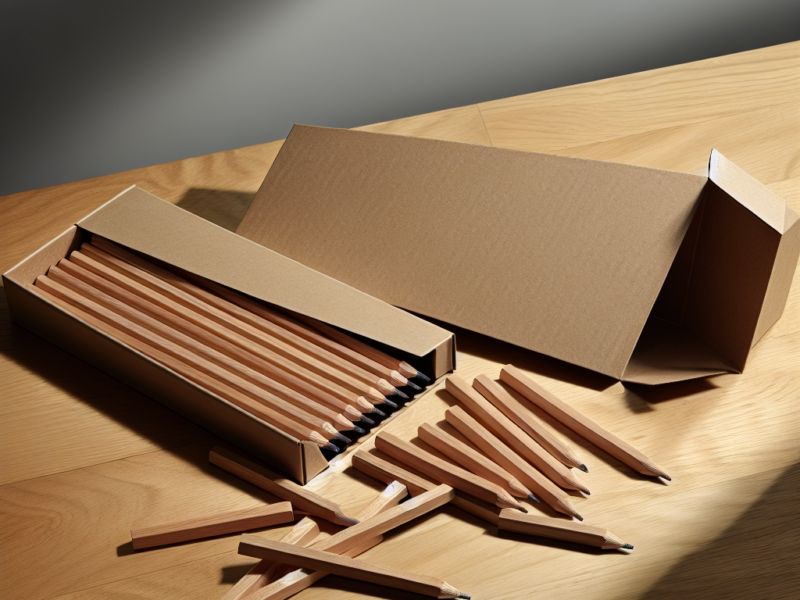
In today’s globalized economy, pencil manufacturers don’t just compete on product quality—they also compete on how efficiently they move goods across borders. Pencil export logistics is more than just shipping; it’s a complex web of planning, documentation, compliance, and timing. For pencil factories aiming to remain competitive in international markets, mastering logistics is essential to reducing costs, meeting delivery commitments, and maintaining a smooth production cycle.
This article explores actionable logistics strategies that pencil manufacturers can adopt to streamline their export operations, optimize factory output, and gain a competitive edge in global trade.
Why Export Logistics Matters for Pencil Manufacturers
Pencil production is a high-volume, low-margin industry. That means any inefficiency—whether in packaging, documentation, or freight selection—can erode profits quickly. Export logistics isn’t just a back-end operation; it directly impacts factory scheduling, raw material procurement, and customer satisfaction.
When logistics are optimized, factories can:
- Reduce lead times and avoid production delays
- Lower freight and warehousing costs
- Improve shipment accuracy and compliance
- Enhance customer trust with predictable delivery timelines
In short, smart logistics translates into smoother operations across the entire supply chain.
Understanding the Pencil Export Logistics Workflow
The logistics process for exporting pencils involves several coordinated steps. According to Drip Capital, breaking down the process into manageable phases is key to identifying bottlenecks and improving efficiency.
Here’s a simplified workflow tailored to pencil exports:
| Step | Action | Key Considerations |
|---|---|---|
| 1. Order Confirmation | Receive and confirm export order | Check customer specs, quantities, and deadlines |
| 2. Production Scheduling | Align factory output with shipment date | Ensure raw materials are available |
| 3. Packing & Labeling | Pack pencils securely and label as per regulations | Use ISPM 15-compliant wood for pallets if required |
| 4. Documentation | Prepare export documents (invoice, packing list, etc.) | Ensure accuracy to avoid customs delays |
| 5. Freight Booking | Choose carrier and shipping mode (FCL, LCL, air) | Balance cost with transit time |
| 6. Customs Clearance | Submit documentation to customs authorities | Comply with destination country regulations |
| 7. Delivery & Confirmation | Track shipment and confirm delivery with buyer | Handle any claims or discrepancies promptly |
Key Documents Required for Pencil Export
One of the most common causes of export delays is incomplete or incorrect documentation. As highlighted by Cargo Export USA, meticulous document preparation ensures smooth customs clearance and legal compliance.
Essential documents for pencil exports include:
- Commercial Invoice: Lists product details, pricing, and terms of sale.
- Packing List: Describes how items are packed—number of cartons, weight, dimensions.
- Bill of Lading (B/L): Acts as a receipt and contract for the shipment.
- Certificate of Origin: Required by some countries to verify where the pencils were made.
- Export License (if applicable): Depending on the destination and materials used.
Digitizing these documents and using export management software can reduce errors and speed up processing.
Choosing the Right Freight Option: FCL vs. LCL
When exporting pencils in bulk, the choice between Full Container Load (FCL) and Less than Container Load (LCL) can significantly impact cost and timing. As explained by Tabcut, FCL is often more cost-effective per unit when volume justifies it, while LCL is better suited for smaller shipments.
| Shipping Mode | Pros | Cons |
|---|---|---|
| FCL (Full Container Load) |
|
|
| LCL (Less than Container Load) |
|
|
For pencil factories, planning production around FCL shipments can lead to better cost efficiency, especially when exporting to high-volume markets like the U.S., EU, or Middle East.
Strategic Logistics Planning: A Factory Game-Changer
Logistics planning is not just a logistics department task—it should be integrated into factory operations. According to CIE Services, mapping out each export step in advance helps manufacturers avoid costly miscommunications and delays.
Here’s how strategic logistics planning benefits pencil factories:
- Capacity Alignment: Synchronizes production schedules with shipping timelines to avoid overstocking or idle inventory.
- Cost Forecasting: Anticipates freight rate fluctuations and seasonal surcharges.
- Risk Mitigation: Builds contingency plans for port strikes, customs inspections, or geopolitical disruptions.
- Regulatory Compliance: Ensures all exports meet local and destination country standards, reducing the risk of fines or rejections.
Using digital logistics tools and ERP integrations can help automate this planning process and improve coordination across departments.
Tips to Improve Pencil Export Logistics Efficiency
Here are some practical, factory-level strategies to enhance export logistics:
- Standardize Packaging: Use uniform box sizes to maximize container space and reduce handling time.
- Pre-Bundle SKUs: Group high-demand pencils (e.g., HB, 2B) into export-ready pallets to speed up fulfillment.
- Negotiate Freight Contracts: Lock in rates with preferred carriers for predictable shipping costs.
- Use Freight Forwarders: Partner with experienced agents who understand pencil-specific logistics.
- Implement Barcode Tracking: Improve traceability from factory to overseas warehouse.
These small adjustments, when scaled across hundreds of shipments, can yield significant savings and efficiency gains.
Compliance and Quality Assurance in Export Logistics
Beyond speed and cost, compliance is a critical pillar of export logistics. Pencil exports, especially those made with wood, may be subject to phytosanitary regulations, safety standards, and labeling laws in the destination country.
To stay compliant:
- Ensure raw materials (e.g., cedar wood) meet FSC or PEFC certification requirements
- Label packaging with proper HS codes and country of origin
- Understand REACH and EN71 standards if exporting to the EU
- Conduct pre-shipment inspections to catch defects or labeling errors
Non-compliance can lead to shipment rejections, fines, or even bans from certain markets—so quality control and legal review are non-negotiable.
Final Thoughts: Logistics as a Competitive Advantage
In the pencil manufacturing world, where margins are tight and competition is fierce, logistics is not just a support function—it’s a strategic lever. By investing in smarter pencil export logistics strategies, factories can unlock better efficiency, reduce costs, and build stronger relationships with international buyers.
Whether you’re a small OEM pencil producer or a large-scale exporter, the principles remain the same: plan ahead, document meticulously, and always look for ways to streamline. With the right approach, logistics becomes not a cost center, but a growth driver.
Related Reading
- Sample QC Checklist Pencils Importers Must Follow
- Securing Long-Term OEM Supply Pencils Through Agreements
- Pencil Packaging OEM Solutions for Retail Chains
- Multilingual Packaging OEM Strategies for Global Brands
- Factory Production Video Builds OEM Buyer Trust
- Boost Pencil Sales with Barcode Packaging Solutions
- Pencil Breakage Prevention Tips for Export Packaging
- Boost Branding with Heat Transfer Pencils OEM Solutions