
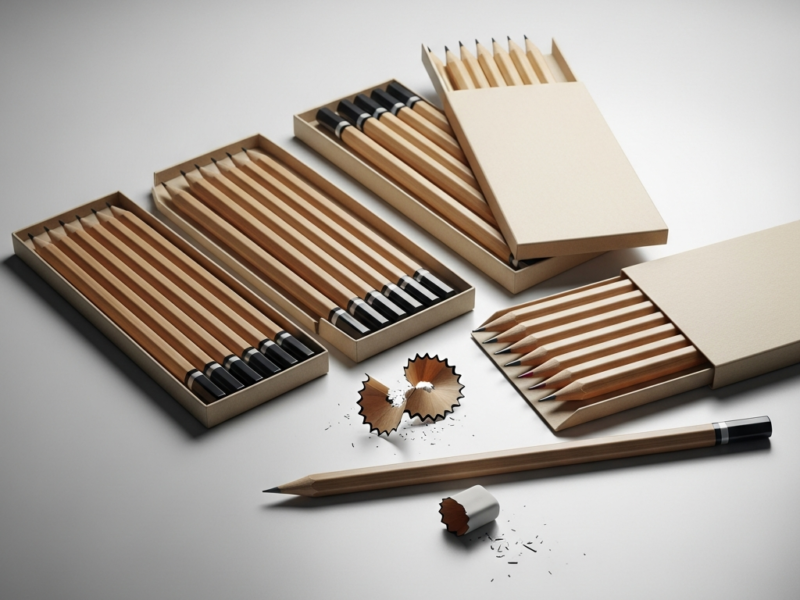
Understanding the mechanical integrity of a pencil involves more than just evaluating the graphite core or the quality of the wood casing; it requires a deep dive into the science of how various finishes bond to the substrate. The outer layers of a pencil serve both aesthetic and functional purposes, providing a tactile experience for the user while protecting the wood from moisture and environmental degradation. When we discuss coating adhesion pencils, we are examining a critical quality control metric that ensures the lacquer does not flake, peel, or chip during the sharpening process or throughout the lifecycle of the tool.
The Fundamentals of Coating Adhesion in Stationery Manufacturing
Adhesion is defined as the tendency of dissimilar particles or surfaces to cling to one another. In the context of pencil manufacturing, this refers to the bond between the wooden slat (typically incense cedar or basswood) and the multiple layers of lacquer or paint applied to its surface. This bond is achieved through two primary mechanisms: mechanical interlocking and chemical bonding. Mechanical interlocking occurs when the liquid coating flows into the microscopic pores of the wood grain, solidifying to create a “root” system. Chemical bonding involves the molecular attraction between the functional groups in the coating resin and the cellulose or lignin in the wood. Achieving high-quality coating adhesion pencils requires a precise balance of viscosity, surface tension, and curing time. If the coating is too thick, it may bridge over pores rather than penetrating them; if it is too thin, it may not provide enough film build to resist mechanical stress. Manufacturers often use primers or “sealers” as an intermediate layer to bridge the gap between the porous wood and the high-gloss topcoat, ensuring a seamless transition of physical properties.
The Pencil Hardness Test: A Historical Industry Conundrum
One of the most ubiquitous methods for testing the scratch resistance of any coating is, ironically, the pencil hardness test. This method is a staple in industries ranging from automotive to aerospace, yet it is often described as a “conundrum” by experts in the field. According to the American Coatings Association, the test involves applying pencil leads of known hardness at a 45-degree angle against a coated surface under a constant force. While valued for its simplicity and speed, the test is fraught with variables that can lead to inconsistent results. For instance, the exact moisture content of the wood in the testing pencil, the pressure applied by the operator, and even the sharpness of the lead can influence the outcome. In the world of coating adhesion pencils, this test is used to determine the threshold at which a finish will yield to mechanical pressure. If a coating is rated at “4H,” it means a 5H pencil will scratch the surface, while a 4H pencil will not. This comparative scale provides a baseline for durability, but as the ACA suggests, it may not fully capture the complex mechanical realities of abrasive environments where coatings must withstand more than just a sharp point.
Scratch Resistance vs. Adhesion Strength
It is a common misconception that scratch resistance and adhesion are the same thing. While they are related components of “durability,” they measure different physical failures. Scratch resistance is the ability of a surface to resist permanent deformation from a sharp object, whereas adhesion is the ability of the coating to remain attached to the substrate under stress. As noted by Anton Paar, coatings like automotive paint are engineered to resist everyday wear, but they are not impervious. A coating might have incredible surface hardness but poor coating adhesion pencils, meaning it could resist a scratch but then flake off in large chunks if the bond is compromised. In pencil manufacturing, a lacquer that is too brittle may have high scratch resistance but will fail the sharpening test, where the wood is sliced at an angle. The ideal pencil finish must be “tough”—a combination of hardness and elasticity that allows the coating to deform slightly with the wood without losing its grip on the fibers.
Quantifying Adhesion with Pull-Off Testing
When qualitative tests like the “cross-cut” test or the pencil hardness test are insufficient, engineers turn to quantitative methods to measure the exact force required to rupture the bond. Pull-off adhesion testing is one such method, providing a numerical value in psi (pounds per square inch) or MPa (mega Pascals). This process involves gluing a small metallic “dolly” to the surface of the coated pencil and using a hydraulic or mechanical device to pull it perpendicularly away from the wood. The experts at DeFelsko highlight that this method quantifies the tensile strength of the bond. For coating adhesion pencils, this data is invaluable during the research and development of new water-based or UV-cured lacquers. If the failure occurs within the wood (substrate failure), the coating is considered stronger than the material it protects. If the failure occurs between the wood and the paint (adhesive failure), the formulation must be adjusted to improve wetting or chemical attraction. This rigorous data-driven approach ensures that premium pencils can withstand the rigors of heavy use in professional artistic or technical environments.
The 9H Hardness Scale: Marketing vs. Science
In recent years, the term “9H” has become a buzzword, especially in the marketing of ceramic coatings for cars and mobile devices. However, this rating is deeply rooted in the pencil hardness scale (ranging from 9B to 9H). As explained by IGL Coatings, the 9H rating indicates that the hardest standardized pencil lead cannot scratch the surface. It is important to distinguish this from the Mohs scale of mineral hardness, where 10 is a diamond. A 9H pencil hardness rating is impressive for a thin-film coating, but it does not make the object “scratch-proof” against sand or quartz, which are significantly harder. When evaluating coating adhesion pencils in a manufacturing context, reaching an 8H or 9H topcoat hardness is often the goal for “pro” lines, as it prevents the pencil from becoming marred or scuffed when rattling around in a pencil case. However, increasing the hardness often increases the brittleness, making the challenge of maintaining adhesion even more difficult during the high-speed vibrations of a mechanical pencil sharpener.
Adhesion Across Different Substrates and Flexible Materials
The science of adhesion changes dramatically when the substrate is no longer a rigid piece of cedar. Many modern pencils utilize plastic-wood composites or even flexible recycled materials. According to Textiles.org, adhesion is a fundamental pillar of success for coatings on flexible substrates. In the stationery world, this is relevant for “soft-touch” coatings or rubberized grips often found on mechanical pencils and high-end wooden pencils. If the substrate can bend or stretch, the coating must possess a high degree of elongation. If the coating adhesion pencils do not account for the flexibility of the material, the finish will develop “alligatoring” or micro-cracks. This highlights that “durability” is a holistic term; a coating is only as good as its ability to move and age alongside the material it covers.
Common Adhesion Test Methods in Stationery Manufacturing
To ensure consistent quality, pencil factories employ a variety of standardized tests. These methods allow manufacturers to catch batches with poor bonding before they reach the consumer. The following table outlines the most common tests used to evaluate coating adhesion pencils and their specific purposes.
| Test Method | Standard Reference | Primary Goal | Result Type |
|---|---|---|---|
| Pencil Hardness | ASTM D3363 | Measure surface scratch resistance | Grade (e.g., 2H, 4H) |
| Cross-Cut Tape Test | ASTM D3359 | Evaluate adhesion via lattice cuts | 0B (Poor) to 5B (Excellent) |
| Pull-Off Test | ASTM D4541 | Quantify tensile bond strength | Numerical (psi or MPa) |
| Sharpening Test | Internal Factory Std | Simulate real-world use | Pass/Fail (Chipping) |
| Immersion Test | ISO 2812 | Assess adhesion in high humidity | Blistering/Peeling Rating |
The Manufacturing Workflow for Ensuring Superior Adhesion
Creating a pencil with flawless coating adhesion is a multi-step engineering feat. It begins with the preparation of the wooden slats, which must be kiln-dried to a specific moisture content—usually between 6% and 10%. If the wood is too wet, the escaping moisture will cause the coating to blister; if it is too dry, it may absorb too much of the coating’s binder, leaving a “starved” and brittle film. Once the slats are machined into pencils, they enter the lacquering machine. Coating adhesion pencils are typically achieved through a process of “dipping” or “gasket lacquering,” where pencils are pushed through a series of rubber gaskets that wipe away excess paint, leaving a thin, uniform layer. Each layer is flash-dried before the next is applied. Some premium pencils receive up to 12 coats of lacquer. Between certain coats, the pencils may be lightly sanded to remove raised wood fibers (grain raising), which provides a smoother surface for subsequent layers and improves mechanical interlocking. Finally, a clear topcoat is often applied to provide the final hardness and UV resistance.
Factors That Compromise Coating Adhesion
Several factors can lead to failure in the coating-substrate bond. Environmental conditions in the factory play a massive role; high humidity can interfere with the curing of nitrocellulose lacquers, leading to “blushing” or poor adhesion. Contaminants on the wood surface, such as natural oils or waxes used in the slat-treatment process, can act as release agents, preventing the paint from wetting the surface properly. Furthermore, the pigment-to-binder ratio in the paint itself is critical. If a manufacturer adds too much pigment to achieve a vibrant “neon” color, there may not be enough resin (binder) left to secure the pigment particles to the wood. This results in a chalky finish that fails coating adhesion pencils tests. Troubleshooting these issues requires a microscopic analysis of the failure site to determine if the break happened at the interface or within the coating layers themselves.
ASTM Standards and the Importance of Reproducibility
In the global supply chain,
Related Reading
- Prevent Color Migration in Pencil Coating Processes
- Pencil Durability Test: Ensuring Quality in Writing Tools
- Preventing Paint Peeling in Mechanical Pencil QC
- Core Adhesion Pencils: Techniques for Optimal Performance
- Essential Guide to Varnish Pencil Coating Types
- Why Multi-Coating Pencils Improves Durability and Precision
- Pencil Smoothness Test: How to Evaluate Quality Purchases