
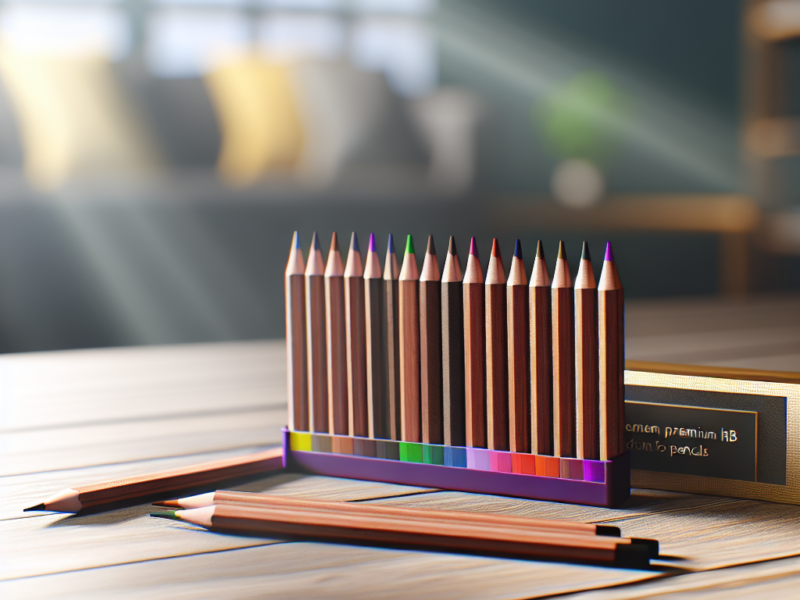
Raw Materials Preparation: Graphite, Clay, and Timber
The performance and consistency of pencils begin at the raw materials stage, where graphite, clay, and wood are carefully selected and processed. The graphite core, often referred to as the “lead,” is made by blending natural graphite powder with refined clay in precise proportions. The graphite-to-clay ratio directly influences the hardness and core strength of the pencil, with higher clay content yielding harder grades suitable for technical drawing, and lower clay content resulting in softer leads used for art and shading. The uniformity of the mixture is crucial; it is typically combined with water to form a homogeneous paste, which is then shaped through an extrusion process to create long, thin rods. Ensuring even dispersion of materials within the core is essential to prevent breakage and maintain consistent writing quality.
Once extruded, the graphite-clay cores are set aside for drying. Moisture control plays a vital role at this stage. Inconsistent drying can lead to internal fractures or warping during the next phase, which involves high-temperature kiln baking. This step solidifies the core structure and strengthens the material by removing residual moisture and improving carbon bonding. The kiln process directly affects the durability and smoothness of the final pencil core. According to Pencil Manufacturing Craftsmanship Explained Step by Step, controlling temperature ramp-up and dwell times during this phase is essential for achieving optimal core properties.
In parallel with core production, timber slats—the outer casing of the pencil—are prepared. Softwoods like incense cedar, basswood, and jelutong are traditionally preferred due to their workability, straight grain, and ability to hold a sharp edge. Timber selection for pencils is based not only on species but also on controlled harvesting and processing practices to ensure dimensional stability. Once logs are cut into pencil-length blocks, they are sliced into thin slats, typically 5.5 mm thick. These slats then undergo a comprehensive drying process. They are stacked with air gaps and placed in climate-controlled chambers where moisture is steadily reduced to the target level, typically between 6% and 8%.
Proper drying prevents warping and cracking during lead insertion and casing assembly. After drying, the slats are planed to uniform thickness and surface-finished to ensure compatibility with gluing equipment. Dimensional balance and moisture equilibrium are crucial at this stage for effective bonding and to reduce the risk of splitting during shaping or sharpening. As highlighted in How Are Pencils Made? The Ultimate Guide, wood slat preparation is a critical factor influencing the overall quality and longevity of the finished product.
Integrating controlled processes for both core and wood preparation ensures that the base materials meet the physical and chemical standards needed for high-quality pencil manufacturing. When graphite and clay mixtures are precisely formulated and kiln-fired, and when timber slats are adequately dried and processed, manufacturers achieve consistency in pencil performance, from smooth graphite flow to reliable sharpening and durability. Each stage of raw material preparation contributes directly to the functionality and compliance of the final product in both domestic and international markets.
Core and Casing Alignment: Slat Grooving to Sandwich Blocks
The alignment of the graphite core within the wooden casing is critical to the performance and durability of every pencil. This begins with the grooving of wood slats, typically made from incense cedar, basswood, or jelutong, depending on customer specifications and regional availability. These slats are precision-milled with parallel channels designed to hold graphite rods securely. The grooving process plays a vital role in proper core centering and writing balance, and the depth and width of each groove directly affect the snugness of the graphite rod during assembly.
Once the grooved slats are produced, they enter the pairing and gluing phase. Slats are first sorted into matched sets based on tolerances for flatness, grain alignment, and groove consistency. This process ensures that when two slats are joined, they form a seamless bond with the graphite rod enclosed at the center. Automated gluing presses apply adhesive along the grooves, after which a graphite core is carefully positioned into each channel. Visual and mechanical checks are conducted at this stage to confirm correct core orientation and alignment.
After inserting the graphite cores, the slats are pressed together to form what are known as pencil sandwich blocks. During this phase, precision gluing aligns the core and seals it in place within the wooden casing. Machinery must maintain consistent pressure and temperature to ensure optimal bonding of the adhesive. The resulting sandwich blocks are then subjected to a controlled curing process, which may involve heated or pressure-regulated curing chambers to stabilize the glue line and prevent future delamination. This stage is essential for the long-term structural integrity of the pencil.
Quality control protocols are implemented throughout the bonding and curing stages. Technicians carry out visual inspections to verify proper core alignment along the longitudinal axis of each sandwich block. Any deviations can result in off-center writing tips after shaping and sharpening, which diminishes writing comfort and affects brand consistency. Automated systems may detect misalignments through high-resolution imaging, supplemented by manual sampling for in-depth inspection. According to The Production Process: How Pencils are Made, advanced gluing technology and groove calibration are vital to ensuring that the final pencil performs reliably in writing and sharpening.
Finally, the cured sandwich blocks are ready for shaping into individual pencils. The accuracy of the grooving, graphite rod placement, and block bonding all contribute to the downstream efficiency of shaping and finishing operations. As covered in How Are Pencils Manufactured?, maintaining strict tolerances during slat pairing and gluing reduces rework and waste in later production stages. Proper alignment in these early steps ensures consistent product quality and supports high-throughput, cost-effective manufacturing.
Shaping and Smoothing: From Blocks to Pencil Bodies
Once the pencil slats have been properly seasoned and cured, they enter the shaping phase, where raw blocks are sawn into long rods that will eventually become pencil bodies. These rods are typically cut to standard dimensions to align with industrial shaping and finishing equipment. Precision at this stage ensures consistency across large production batches and helps reduce material waste. According to The Best Step-by-Step Guide to the Pencil Manufacturing Process, specialized block-cutting machinery handles the sawing process, converting processed wooden slats into pencil-length stock efficiently.
After cutting, the pencil rods move to planing machines designed to create either round or hexagonal profiles, depending on product specifications. Hexagonal shaping remains widely used due to its ergonomic grip and anti-roll characteristics, particularly in school and office markets. Round pencil body planing is preferred for cosmetic and premium artist pencils, where aesthetics and branding play a larger role. Planers ensure that the bodies are shaped uniformly, allowing future stages such as core insertion and lacquering to proceed without alignment issues.
To further enhance consistency, many manufacturers employ lathe shaping in mass production, especially when producing large-volume OEM/ODM pencil orders with complex or non-standard profiles. Computer-controlled shaping lathes can process hundreds of rods per hour, maintaining precise tolerances while delivering the specified contour. Automated shaping lines incorporating both planing and lathe operations help streamline production and reduce the need for manual inspection at this stage.
Following shaping, mechanical sanding machines remove residual splinters and surface imperfections. This process is critical for safety and quality assurance, as rough or uneven surfaces can compromise both user comfort and the effectiveness of surface coatings. Mechanical sanding equipment uses uniformly applied pressure to achieve smooth edge finishing across thousands of units, minimizing variation between individual pencil bodies. As explained by Pencil Making Process, automated smoothing techniques ensure a consistent texture that is essential for downstream operations.
The final step in the shaping and smoothing stage involves preparing the surface of each pencil body for lacquer, branding, or additional finishes. Surface preparation techniques such as micro-sanding or surface activation improve lacquer adhesion, contributing to better coating durability and uniform color application. Even minor inconsistencies in the wood surface can lead to chipping, peeling, or color bleed during the finishing process. For this reason, manufacturers prioritize smooth edge finishing not only for tactile quality but also to support branding integrity, particularly in customized OEM pencil production.
Finishing Touches: Lacquering, Branding, and Ferrule Assembly
After the core assembly and shaping processes are complete, pencils move into the finishing stage, which involves lacquering, branding, ferrule assembly, and eraser mounting. These steps enhance aesthetics, protect the pencil body, and ensure consistent quality for end users. The lacquering process is a critical first step. Manufacturers typically apply multiple layers of lacquer to create durable finishes that resist wear and moisture. This multi-coat application also produces a uniform color and sheen, essential for retail presentation and long-term use. According to Pencil Manufacturing Craftsmanship Explained Step by Step, each lacquer layer is air-dried or oven-cured before the next is applied to ensure optimal adhesion and smoothness.
Once lacquering is complete, the branding process begins. This stage involves placing the client’s logo, product details, or certification marks on the pencil barrel. Depending on design requirements and client preferences, this can be done through hot foil stamping, screen printing, pad printing, or laser etching. Each method offers advantages in visual sharpness, durability, and compatibility with different coatings. Logo stamping and printing are common for standard designs, while laser etching is preferred for premium product lines where permanence is essential. These processes ensure clients receive fully customized products aligned with their branding goals.
The next operation involves attaching the ferrules—metal sleeves that hold the erasers to the pencil body. Ferrules are fitted using automated crimping machines, which press the metal firmly into the pencil without damaging the lacquered surface. The geometry and size of the crimp are calibrated to each pencil type to maintain alignment and structural integrity during use. Ferrule colors and finishes can be customized, from standard aluminum to painted or anodized options, depending on OEM requirements. According to How Are Pencils Made? The Ultimate Guide, metal ferrules are often pre-formed and supplied in reels to streamline automated crimping processes.
The final component is eraser mounting. Erasers are inserted into the ferrules and secured using either high-strength glue or mechanical pressure, depending on the eraser type and ferrule design. For soft erasers, adhesive ensures a firm bond, while harder erasers may rely on compression fitting. Eraser materials can be customized, including PVC-free rubbers, thermoplastics, or synthetic options. Color selection for both erasers and ferrules is typically coordinated with the pencil’s lacquer for a cohesive appearance.
Together, these finishing touches define the pencil’s final quality, durability, and market appeal. Precision in every step—from multi-coat lacquering to eraser mounting—is essential for meeting the expectations of global OEM and ODM clients. The ability to tailor finishing details to exact client specifications allows manufacturers to support diverse branding strategies and regional market preferences.
Final Inspection and Packaging for Export
The final stage of pencil production involves a comprehensive inspection and packaging process designed to meet international quality standards and client-specific export requirements. Each finished pencil undergoes rigorous testing to ensure consistency in core hardness and clarity. A writing test for hardness is conducted on random samples from each batch to verify the graphite’s smoothness, darkness, and resistance to breakage. These tests confirm that the pencil cores meet the specific grade requested by the client, whether for educational, professional, or artistic use.
Center alignment checks are performed with high-magnification QC lenses to assess the precise positioning of the graphite core within the wooden shaft. This is a critical quality benchmark, as misaligned cores can lead to improper sharpening and breakage. Inspectors manually rotate and view samples to ensure alignment is within acceptable tolerances. Units failing to meet alignment or writing performance standards are marked as defects and removed from the production line prior to packaging.
Final visual inspections follow, where inspectors examine surface finish, logo clarity, and coating uniformity. Defects such as scratches, chipped wood, or misprints are flagged during this stage. The Best Step-by-Step Guide to the Pencil Manufacturing Process details QC, visual inspection, and final packaging procedures that are widely adopted in leading factories. This step is essential for brands that require consistent aesthetics across high-volume orders.
Once inspection is complete, the pencils move to the packaging area, where batch packaging procedures begin. Automated conveyor systems transport approved units to designated packing stations. Here, pencils are bulk wrapped in protective material to prevent surface damage during transit. Depending on export requirements, they are then sorted into printed inner boxes, master cartons, or retail-ready displays. Labels are applied automatically or manually, depending on order specifications and volume thresholds.
The packaging configuration is designed to facilitate bulk packing for shipment and reduce handling damage. Cartons are reinforced for export, particularly for sea freight shipments. As explained in Pencil Making Process, bulk shipment preparation steps often include moisture-resistant liners and stacking layout planning to meet container loading efficiency requirements. Automated wrapping and strapping systems finalize the process before pallets are sealed and moved to loading bays.
Automation plays a vital role in ensuring consistency and output reliability during this phase. From automated conveyor systems that eliminate handling errors to sensor-guided packaging machines, the integration of technology helps maintain uniformity across thousands of units per hour. This systematic approach not only reduces human error but also speeds up turnaround times for large overseas orders, ensuring timely delivery to clients while maintaining product integrity.