
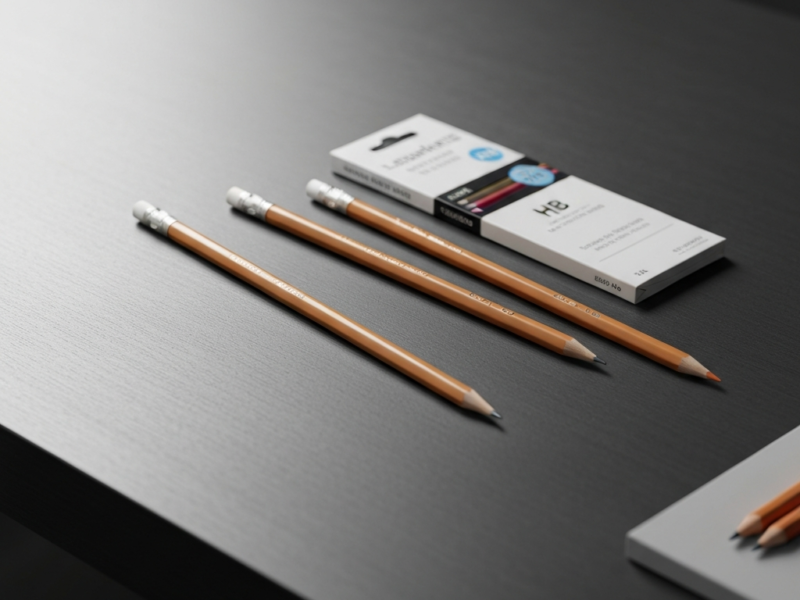
The humble pencil is a marvel of precision engineering that most users take for granted, yet its performance is dictated by a delicate balance of materials. At the heart of every quality writing instrument is the relationship between the marking core and its protective casing, a concept known as the lead-to-wood ratio pencils maintain to ensure durability and functionality. Understanding this ratio is not just for manufacturers or stationery enthusiasts; it is essential for anyone who relies on a pencil for technical drawing, fine art, or everyday writing tasks. This article explores why the physical composition of a pencil matters more than you might think, influencing everything from grip comfort to the longevity of the graphite core.
The Core Components of Pencil Composition
To understand the significance of lead-to-wood ratio pencils, one must first look at what goes into the pencil itself. The “lead” is actually a mixture of graphite and clay, fired at high temperatures to create a solid core. The ratio of graphite to clay determines the hardness or softness of the pencil—more clay results in a harder lead (H grades), while more graphite results in a softer, darker mark (B grades). However, this internal ratio is only half the story. The wood casing, typically made from Incense-cedar or basswood, provides the structural support necessary to prevent this brittle core from snapping under the pressure of writing. When a pencil has an ideal lead-to-wood ratio, the wood is thick enough to absorb the shock of impact and the pressure of the hand, but not so thick that it makes the pencil cumbersome or difficult to sharpen. In manufacturing, the “slat” method is used to sandwich these cores between two pieces of grooved wood. If the grooves are too deep or the core is off-center, the ratio is compromised, leading to a pencil that breaks easily or sharpens unevenly. For further insight into the mechanical side of production, you can explore the traditional pencil making process which highlights how these materials are bonded together.
How the Lead-to-Wood Ratio Affects Structural Integrity
The primary reason why lead-to-wood ratio pencils are so carefully calculated is to maintain structural integrity. Graphite is naturally brittle; without the surrounding wood, it would crumble under minimal lateral force. A pencil with a very thin core and a high volume of wood is incredibly durable, making it ideal for standard office work or school settings where the pencil might be dropped frequently. Conversely, “jumbo” pencils or specialized sketching pencils often feature a much thicker lead-to-wood ratio. In these cases, the core is massive, allowing for broad strokes and expressive shading, but the wood casing is relatively thin. This makes the pencil more fragile and prone to internal “shattering” if dropped. When the wood-to-lead balance is off, the pencil becomes inefficient. If there is too much wood, the user must sharpen the pencil more frequently to expose the lead, leading to wasted material. If there is too little wood, the pencil lacks the girth needed for a comfortable ergonomic grip, often leading to hand fatigue during long writing sessions. Manufacturers must find the “sweet spot” where the wood provides a protective shell without being so bulky that it interferes with the utility of the graphite.
The Technical Relationship Between Hardness and Ratio
While the graphite-to-clay ratio is the direct determinant of a core’s performance, it indirectly dictates the necessary lead-to-wood ratio pencils require to function. Harder leads (like a 4H or 6H) are physically denser and more resistant to breaking, which allows manufacturers to use a slightly thinner wood casing if desired. However, softer leads (like a 6B or 8B) are much more fragile because they contain a higher percentage of slippery graphite and less structural clay. To compensate for this fragility, high-quality artist pencils often feature a thicker core paired with a specific grade of cedar that can be sharpened to a fine point without splintering. This ensures that even though the core is soft, the surrounding wood offers enough tension to keep the point intact. Professionals often look for lead grade performance characteristics to match their specific needs, but they rarely consider how the wood casing is supporting those grades. A soft 6B core in a cheap, low-density wood casing will likely break inside the barrel long before the pencil is used up, demonstrating why the ratio and material quality must go hand-in-hand.
Comparing Common Lead-to-Wood Ratios
Different tasks require different pencil geometries. A standard #2 (HB) pencil usually follows a standardized ratio that balances economy with performance. However, specialty pencils deviate from this norm to provide specific benefits. The following table illustrates how the lead-to-wood ratio pencils vary across different categories:
| Pencil Type | Core Diameter (Approx.) | Total Diameter (Approx.) | Primary Use Case |
|---|---|---|---|
| Standard Office (HB) | 2.0mm – 2.2mm | 7.0mm | General writing and note-taking. |
| Fine Detail/Technical | 1.5mm – 1.8mm | 7.0mm | Precise lines and drafting. |
| Artist Sketching | 3.0mm – 4.0mm | 8.0mm | Shading and bold strokes. |
| Carpenter Pencil | Wide/Flat Core | 12mm x 7mm (Flat) | Marking rough lumber and masonry. |
| Jumbo/Children’s | 3.5mm – 5.0mm | 10.0mm | Early childhood motor skill development. |
As seen in the table, the lead-to-wood ratio pencils utilize is a deliberate design choice. A technical pencil uses a smaller core relative to the wood to ensure the tip can be sharpened to a needle-like point without the graphite snapping. In contrast, a jumbo pencil for children uses a very thick core and thick wood to make the tool easier to hold and harder to break, catering to developing motor skills and a lack of pressure control.
The Pros and Cons of High vs. Low Wood Ratios
When choosing a pencil, understanding the trade-offs of the lead-to-wood ratio pencils offer can help you select the right tool for your specific workflow. There is no “perfect” ratio, only the right ratio for the job at hand.
- High Wood-to-Lead Ratio (Thin Core):
- Pros: Excellent for fine detail, holds a point longer, less prone to breaking if dropped, easier to sharpen in standard sharpeners.
- Cons: Requires more frequent sharpening to keep lead exposed, less suitable for shading or filling large areas.
- Low Wood-to-Lead Ratio (Thick Core):
- Pros: Allows for expressive mark-making, covers large areas quickly, feels “smoother” due to larger surface contact.
- Cons: More fragile, requires specialized sharpeners, can be heavier and cause hand fatigue.
Manufacturing Precision: The Slat and Groove Process
The manufacturing of lead-to-wood ratio pencils is a fascinating study in industrial efficiency. It begins with “slats”—thin rectangular blocks of wood. These slats are precisely grooved to exactly half the thickness of the graphite core. When two slats are glued together with the cores inside, the resulting “sandwich” must be perfectly aligned. If the grooves are off by even a fraction of a millimeter, the lead-to-wood ratio becomes lopsided. This results in a pencil where the wood is thicker on one side than the other, making it impossible to sharpen properly. High-end manufacturers use sensory technology and precision milling to ensure that the core remains perfectly centered. This level of quality control is what separates a professional-grade pencil from a budget variety. When the ratio is centered, the wood supports the lead evenly from all 360 degrees, which is critical for maintaining a sharp point during technical work.
The Role of Wood Species in the Ratio Equation
Not all wood is created equal when it comes to supporting the lead-to-wood ratio pencils require. Incense-cedar is the gold standard because it is soft enough to sharpen easily but strong enough to hold the core firmly. Other woods, like basswood or poplar, are often used in budget pencils. These woods have different densities, which affects how they interact with the lead. For example, a very hard wood might provide great protection, but it becomes difficult to sharpen, often leading to the user applying too much torque and snapping the lead. A wood that is too soft may not provide enough lateral support, causing the lead to wobble or break during use. The density of the wood must be balanced with the thickness of the core to create a harmonious writing experience. This is why many professional artists are fiercely loyal to specific brands that use premium cedar, as the wood’s interaction with the core is just as important as the graphite itself.
Environmental Impact and Material Efficiency
In the modern manufacturing landscape, the lead-to-wood ratio pencils utilize also has environmental implications. Wood is a renewable resource, but it must be managed responsibly. By optimizing the lead-to-wood ratio, manufacturers can minimize wood waste. For example, if a core can be made slightly more durable through better graphite-clay blending, the wood casing can be made slightly thinner without compromising the pencil’s integrity. This saves timber over millions of units produced. Additionally, some companies are moving toward extruded pencils made from wood-plastic composites or recycled wood fibers. These materials allow for even more precise control over the ratio, as the entire pencil is formed as a single continuous piece rather than a sandwich. However, traditionalists still prefer the feel and scent of real cedar, which continues to drive the demand for high-quality wood-cased instruments.
Sharpening Physics and the Ratio
The way a pencil sharpens is the ultimate test of its lead-to-wood ratio pencils design. When you insert a pencil into a sharpener, the blade removes both wood and graphite simultaneously. If the wood is too thick, the blade must work harder, generating more heat and friction, which can actually weaken the graphite core’s bond to the wood. A well-designed ratio allows the blade to glide through the wood and the lead with equal resistance. This is particularly important for colored pencils, which have wax-based cores that are even softer than graphite. In the world of premium stationery, “point retention” is a key metric, and it is directly influenced by how the wood casing tapers toward the lead. A steeper sharpening angle requires a more robust lead-to-wood ratio to prevent the exposed “long point” from snapping. Artists who use “long point” sharpeners need pencils with high-quality wood that won’t splinter when the casing is shaved down to a very thin layer.
Choosing the Right Pencil Based on Ratio
For the average consumer, selecting lead-to-wood ratio pencils usually comes down to the intended application. If you are a student taking standardized tests, a standard HB pencil with a balanced ratio is best for legibility and durability. If you are an architect or drafter, you might prefer a technical pencil with a slightly higher wood-to-lead ratio to ensure that your 4H lead never snaps during a critical line drawing. For the fine artist, a range of ratios is necessary; thick-core pencils for bold layouts and thin-core pencils for final details. When shopping for pencils, look at the end of the pencil (the “butt”) where the lead is exposed. You can visually inspect the centering of the lead and the thickness of the wood. A centered core with consistent wood thickness is a hallmark of a well-manufactured tool that will serve you well through its entire lifespan.
Summary of Key Performance Factors
To conclude our deep dive into lead-to-wood ratio pencils, let’s summarize the factors that determine why this ratio matters for your daily use. Every aspect of the pencil’s life, from its birth in the factory to its final stub in the sharpener, is influenced by this geometric relationship. Below are the key takeaways for any stationery enthusiast or professional:
- Durability: The wood acts as a shock absorber. Proper ratios prevent internal breakage of the core.
- Sharpenability: Centered leads and consistent wood thickness lead to a smooth sharpening experience without wood splintering.
- Ergonomics: The diameter of the wood casing dictates how the pencil feels in the hand, impacting long-term comfort and control.
- Economic Value: A pencil with an optimized ratio lasts longer because it requires less sharpening to get to the “usable” lead.
- Artistic Versatility: Variations in ratio allow for specialized tools, from the fine points of technical drawing to the broad strokes of charcoal and graphite sketching.
Ultimately, the lead-to-wood ratio pencils provide is a testament to the fact that even the simplest tools require sophisticated thought and engineering. Whether you are sketching a masterpiece or simply jotting down a grocery list, the balance
Related Reading
- Centered Lead QC: Essential for Pencil Performance & Quality
- Pencil Casing Thickness: Key Insights for Artists
- Core Adhesion Pencils: Techniques for Optimal Performance
- Maintaining Lead Diameter Tolerance in Pencil Quality Control
- Pencil Slats Manufacturing: A Comprehensive Guide
- Strong Graphite Pencil Cores: Hardness Grades & Uses
- Kiln-Dried Wood Pencils: Ensuring Stability and Quality
- Prevent Pencil Core Breakage During Sharpening Tips