
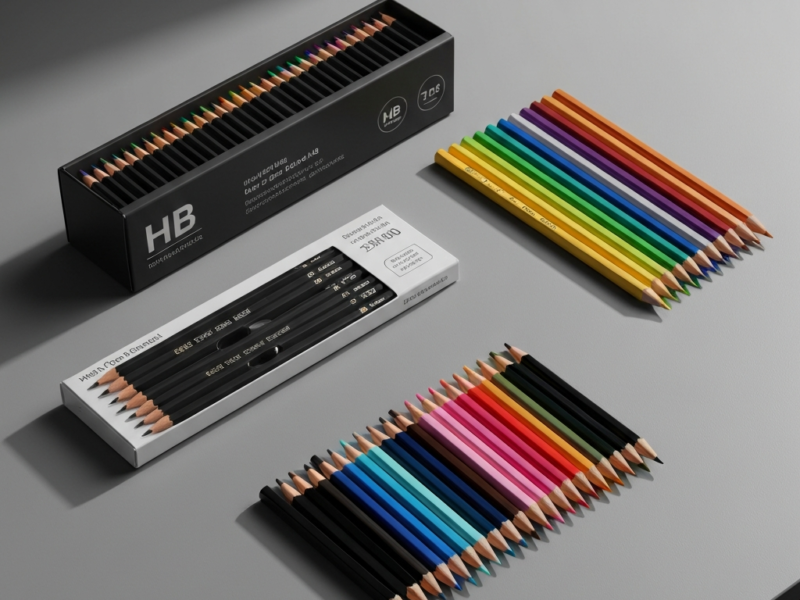
When you press a sharpened pencil against a crisp sheet of paper, you expect a smooth, dark line to flow effortlessly from the tip. This simple act is the result of centuries of material science and meticulous manufacturing processes designed to create a perfect writing core. However, the presence of air bubbles graphite manufacturers work hard to eliminate can quickly turn a premium writing experience into a frustrating series of broken points and scratchy skips. Understanding the structural integrity of pencil lead requires a deep dive into the hidden world of stationery manufacturing, where even microscopic voids can dictate the difference between a masterpiece and a mess.
The Persistent Myth of Lead in Pencils
Before exploring the technical nuances of manufacturing flaws, it is essential to address a fundamental piece of terminology that often confuses consumers. Despite being universally referred to as “pencil lead,” there is absolutely no metallic lead in modern pencils, nor has there been for centuries. This persistent misnomer dates back to the 16th century when a massive deposit of graphite was discovered in Borrowdale, England. At the time, chemistry was in its infancy, and the shiny, dark substance was mistaken for a form of “plumbago” or black lead. It was not until 1779 that scientists definitively proved that the material was actually pure carbon, as noted in the historical insights from NPR. This distinction is vital because the properties of air bubbles graphite cores possess are entirely related to the behavior of carbon structures rather than heavy metals. Understanding this historical development helps frame the discussion about modern pencil manufacturing and the safety standards we enjoy today. Many people still worry about lead poisoning from a pencil poke, but since the core is a mixture of graphite and clay, the risks associated with metallic lead are non-existent. This historical context provides a rich backdrop for explaining why the term “pencil lead” persists despite its scientific inaccuracy. In fact, if you were to leave a pencil exposed to the environment for years, the carbon inside would remain stable and non-toxic, debunking myths about “air-exposed” toxicity that occasionally circulate on platforms like Quora.
The Anatomy of a Modern Graphite Core
Modern pencil lead is a sophisticated composite material engineered for specific performance characteristics. The two primary ingredients are natural graphite, which provides the lubrication and darkness, and ceramic clay, which acts as the binding agent and determines the hardness. In higher-end products, especially mechanical pencil leads, manufacturers may also include plastic polymers or specialized waxes to enhance smoothness and strength. According to the JetPens guide to mechanical pencils, these components are blended into a fine paste that must be perfectly homogenous. When the mixture is uniform, the resulting air bubbles graphite-free core provides a consistent flow of carbon particles onto the paper surface. The ratio of graphite to clay is what gives us the familiar grading scale, from the soft and dark 9B to the hard and light 9H. A higher concentration of clay results in a harder lead that holds its point longer but produces a lighter mark, while more graphite yields a buttery, dark stroke. If air pockets are introduced during this mixing phase, they disrupt the ratio of materials at specific points along the lead’s length. This leads to unpredictable performance, where one inch of the pencil might write like a 2B, while the next feels like a scratchy 4H due to the lack of lubricating graphite in a void.
How Air Bubbles Form During Manufacturing
The manufacturing process for pencil lead is a multi-stage journey that begins with “slurring” the graphite and clay in massive vats of water. This liquid mixture is filtered and dried until it reaches a dough-like consistency, at which point it is ready for extrusion. Extrusion involves forcing this “dough” through a diamond or sapphire die to create long, thin cylinders of lead. It is during this high-pressure phase that air bubbles graphite can become trapped if the machinery is not perfectly calibrated or if the raw materials contain impurities. If the vacuum systems used during the “de-airing” process fail, tiny pockets of atmospheric gas remain suspended within the dense graphite-clay matrix. These “green” leads are then dried and fired in a kiln at temperatures exceeding 1,000 degrees Celsius (1,832 degrees Fahrenheit). In the intense heat of the kiln, any trapped air expands rapidly according to the ideal gas law. This expansion can cause the air bubbles to grow or even cause the lead to crack internally. High-quality manufacturers like those highlighted by DurzerdPencil employ rigorous quality controls to ensure that these voids are eliminated before the leads reach the final consumer. When these bubbles survive the firing process, they become permanent structural defects that compromise every aspect of the tool’s utility.
The Critical Impact of Air Bubbles on Writing Performance
The most immediate and noticeable effect of internal voids is a phenomenon known as “skipping.” As the graphite wears down through friction with the paper, it eventually reaches the point where an air bubble is located. Because there is no material in that space to transfer to the paper, the line simply disappears or becomes extremely faint. This is not just a nuisance for students; for artists and architects, it can ruin hours of meticulous work. Furthermore, air bubbles graphite creates a “scratchy” sensation because the edges of the void are often sharp and lack the lubrication provided by the surrounding graphite. Instead of gliding, the pencil catches on the paper fibers, potentially tearing thin vellum or tracing paper. This inconsistency is a hallmark of low-grade stationery often found in bulk-buy “no-name” brands. Premium brands invest in superior de-airing technology specifically to prevent this tactile feedback. When a writer feels a consistent “drag” or “bite” on the paper, they can control their strokes with precision. Air bubbles destroy that feedback loop, making it impossible to maintain a steady pressure or line weight. Below is a comparison of how internal voids affect various lead characteristics.
| Feature | Solid Graphite Core | Lead with Air Bubbles |
|---|---|---|
| Line Consistency | Uniform and continuous | Frequent skipping and blotchiness |
| Point Strength | High resistance to pressure | Prone to sudden snapping |
| Tactile Feel | Smooth and buttery | Scratchy and inconsistent |
| Sharpenability | Clean, sharp point | Crumbles or falls out of casing |
| Durability | Long-lasting wear | Rapid wear at void sites |
Structural Integrity and the Breaking Point
From a physics perspective, an air bubble is a point of zero structural integrity within a cylinder that is already quite thin. Pencil leads are designed to withstand significant vertical pressure, but they are naturally brittle and have poor tensile strength. When air bubbles graphite flaws are present, they act as “stress concentrators.” When you apply pressure to the tip of a pencil, that force is transmitted up the shaft of the lead. If that force hits a hollow pocket, the surrounding walls of the lead cannot support the load, and the lead snaps. This is particularly problematic in mechanical pencils, where the lead is not supported by a wooden sleeve. In a traditional wood-cased pencil, the wood provides some lateral support, but the lead will still break internally, leading to those frustrating moments where you sharpen a pencil only for the entire tip to fall out. This cycle of “sharpen and snap” is often blamed on dropping the pencil, but it is frequently the result of poor manufacturing quality and internal voids. For professional draftsmen, the reliability of the lead is paramount, as a sudden break can leave a permanent indent or smudge on a technical drawing. By eliminating these air pockets, manufacturers ensure that the lead can withstand the rigors of heavy-handed writing and high-angle shading.
The Science of Smoothness: Why Voids Matter to Artists
For the artistic community, the texture of a pencil is just as important as the darkness of the mark. Graphite works because the carbon atoms are arranged in sheets that slide over one another with minimal friction. When you add air bubbles graphite into this molecular dance, you disrupt the laminar flow of the graphite sheets. This disruption results in “micro-stuttering,” where the pencil tip vibrates at a high frequency as it passes over the uneven surface of a void. To an artist working on a smooth portrait, this micro-stuttering manifests as an uneven “tooth” in the shading, making it difficult to achieve those perfect, photorealistic gradients. Furthermore, high-quality leads are often impregnated with oils or waxes after the firing process to fill any natural microscopic pores in the ceramic-graphite matrix. However, an actual air bubble is far too large to be “filled” by this waxing process. The wax simply coats the interior of the bubble, leaving a hollow space that still lacks the structural density of the rest of the lead. This is why even a “waxed” cheap pencil will never feel as smooth as a premium professional-grade pencil. The foundational density of the lead must be perfect from the start, a fact emphasized in the technical analysis by DurzerdPencil.
Quality Control in the Stationery Industry
How do the world’s best pencil manufacturers ensure their leads are free from these invisible defects? The answer lies in sophisticated industrial monitoring and high-pressure processing. Leading factories use “vacuum extrusion,” where the graphite dough is processed in a chamber that has had all atmospheric gases removed. Sensors monitor the density of the extruded lead in real-time; if a drop in density is detected, indicating air bubbles graphite presence, the entire batch is rejected and recycled. Some manufacturers even use ultrasonic testing or X-ray inspection on sample batches to visualize the internal structure of the leads. This level of scrutiny is what separates a $0.50 pencil from a $5.00 professional drawing tool. In the
Related Reading
- Ensuring Batch Consistency in Pencil Manufacturing
- Pencil Compression Strength: Materials, Design, Durability
- Lead-to-Wood Ratio Pencils: Why It Matters
- Strong Graphite Pencil Cores: Hardness Grades & Uses
- Centered Lead QC: Essential for Pencil Performance & Quality
- Pencil Durability Test: Ensuring Quality in Writing Tools
- Understanding Graphite Baking Stages in Pencil Lead Production
- Prevent Pencil Core Breakage During Sharpening Tips