
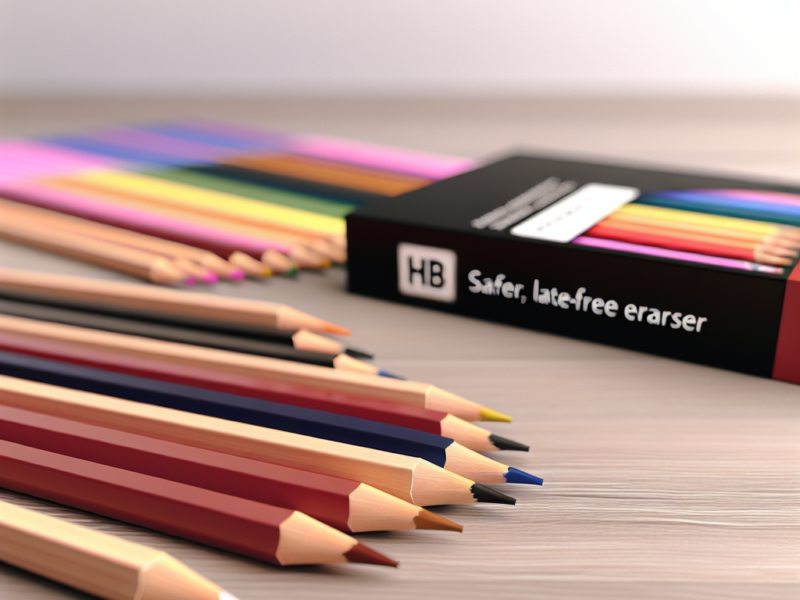
In classrooms across the country, the humble pencil remains a staple of daily learning. Yet, as schools become more health-conscious and environmentally aware, the materials used in even the smallest supplies come under scrutiny. One such item is the eraser pencil—a seemingly innocuous tool that can pose unexpected risks if it contains latex or PVC. For educators, parents, and procurement officers, choosing latex-free eraser pencils is more than a preference; it’s a safety imperative and a step toward a more sustainable learning environment.
Why Latex-Free Matters in School Supplies
Latex allergies are more common than many realize, especially among children. The American Latex Allergy Association estimates that up to 6% of the general population may have some form of sensitivity to natural rubber latex. In a classroom of 30 students, that could mean one or two children are at risk of allergic reactions from contact with latex-containing products. Symptoms can range from mild skin irritation to severe anaphylaxis.
When it comes to eraser pencils, latex is often used in the eraser component due to its elasticity and durability. However, this material can be a hidden hazard. Opting for latex-free alternatives eliminates this risk entirely, creating a safer, more inclusive classroom environment where every child can participate without concern.
Understanding What’s Inside an Eraser Pencil
To make informed decisions, it’s important to understand the composition of eraser pencils. Traditional erasers are often made from natural rubber (latex) or synthetic rubbers such as PVC (polyvinyl chloride). While PVC offers good erasing performance, it comes with its own set of health and environmental concerns.
As highlighted in a Reddit discussion on PVC and erasers, PVC contains phthalates and other plasticizers that can be toxic over time. These compounds may off-gas or leach out, especially in warm environments like a school backpack or pencil case. Children, who are more vulnerable to chemical exposure, are at greater risk.
Latex-free eraser pencils typically replace these materials with safer alternatives such as thermoplastic elastomers (TPE), vinyl-based polymers that are phthalate-free, or high-polymer compounds. These innovations not only reduce health risks but often outperform traditional materials in terms of durability and erasing precision.
Benefits of High-Quality Latex-Free Eraser Pencils
Modern latex-free eraser pencils are not merely safer—they’re also better designed for performance. According to Nano Micron Spheres, hi-polymer latex-free erasers require less pressure to remove graphite, which minimizes paper damage and improves overall erasing quality. This makes them ideal for students, artists, and professionals alike.
Here are some standout benefits:
- Allergy-safe: No latex, reducing the risk of allergic reactions.
- Smear-resistant: Leaves less residue and ensures cleaner pages.
- Durable: Lasts longer than traditional rubber erasers, reducing waste.
- Precision erasing: Ideal for fine details, especially in art and design work.
Comparison: Latex vs. Latex-Free Eraser Pencils
| Feature | Latex Eraser Pencils | Latex-Free Eraser Pencils |
|---|---|---|
| Allergen Risk | High (natural rubber latex) | None |
| Material Safety | May contain PVC or phthalates | Often PVC-free, non-toxic |
| Erasing Quality | Can smudge or tear paper | Clean, smooth erasure |
| Durability | Wears down quickly | Lasts longer with consistent performance |
| Eco-Friendliness | Low (non-biodegradable materials) | Higher (some recyclable polymers) |
What to Look for When Buying Latex-Free Eraser Pencils
Not all latex-free products are created equal. When sourcing eraser pencils for schools or personal use, consider these criteria:
- Material Composition: Verify that the eraser is both latex-free and PVC-free. Look for hi-polymer or TPE materials.
- Certifications: Products labeled as ASTM D4236 or EN71 compliant are tested for safety and toxicity.
- Smear Resistance: Choose erasers that don’t leave behind graphite smudges or paper fibers.
- Durability: A longer-lasting eraser reduces the frequency of replacement, saving money and reducing waste.
- Ergonomics: For younger students, a pencil with a comfortable grip and easy-to-hold shape can improve usability.
Top Picks for Classroom-Safe Latex-Free Eraser Pencils
According to a curated list by We Are Teachers, several brands have distinguished themselves in the latex-free category. These include:
- Pentel Hi-Polymer Eraser Pencils: Known for their soft yet precise erasing capabilities, these are a favorite among both students and artists.
- Ticonderoga Latex-Free Erasers: Attached to their classic yellow pencils, these erasers are PVC-free and designed for classroom safety.
- Staedtler Mars Plastic: Technically not a pencil eraser but often paired with mechanical pencils; it’s a high-performance, latex-free option praised for clean erasure.
Latex-Free Erasers in Art and Design Education
In art classrooms, the need for precision and clean erasure is paramount. Latex-free erasers offer a soft touch and minimal abrasion, making them ideal for use on delicate sketch paper or technical drawings. High-polymer formulas often erase cleanly without ghosting, which is critical when working with graphite layers or ink outlines.
Artists also benefit from the durability of these erasers. Since they don’t crumble or wear unevenly, they maintain their shape longer, allowing for consistent erasing in detailed work. This means fewer interruptions during creative flow and less frequent replacement—a win for both productivity and budgets.
Environmental Considerations: Beyond Health
Choosing latex-free eraser pencils is not only a health-conscious decision but also an environmentally responsible one. Traditional erasers made with PVC contribute to plastic pollution and can release harmful chemicals during manufacturing and disposal. In contrast, many latex-free erasers are made from recyclable or biodegradable materials.
Some manufacturers now offer erasers made from thermoplastic elastomers that are free of phthalates and heavy metals. These materials can be recycled in certain municipal systems, reducing landfill waste. Schools striving for green certification or eco-conscious procurement policies will find these products align with their sustainability goals.
Procurement Tips for Schools and Districts
When sourcing latex-free eraser pencils for an entire school or district, bulk purchasing and vendor transparency are key. Here’s a simple workflow to guide the process:
- Audit current supplies: Identify which products contain latex or PVC.
- Research alternatives: Use vendor catalogs or third-party reviews to find certified latex-free options.
- Request samples: Test for performance, durability, and student feedback before committing to large orders.
- Negotiate contracts: Work with suppliers to secure volume discounts and sustainability guarantees.
- Educate staff: Ensure teachers and administrators understand the importance of latex-free materials and how to identify them.
Conclusion: Small Choices, Big Impact
At first glance, an eraser pencil may seem like a minor detail in the vast landscape of school supplies. But when you consider the health, environmental, and educational implications, the choice becomes far more significant. By selecting latex-free eraser pencils, schools can foster safer, more inclusive classrooms while modeling responsible purchasing practices. Whether you’re a teacher, parent, or supply chain manager, this small change can make a meaningful difference—one erasure at a time.
For further information on product safety and alternative materials, explore these resources:
- Reddit Discussion on PVC and Erasers
- Discover the Benefits of Hi-Polymer Latex Free Erasers
- Best Erasers for the Classroom
Related Reading
- EN71-Approved Materials for Safe Pencils and Art Supplies
- Eraser Material Comparison for Artists and Designers
- Pencil Ergonomics: Enhancing Kids’ Handwriting Skills
- School Pencil Buying Guide for Students and Parents
- Essential Pencil Slat Dimensions for OEM Projects
- Pencil Durability Test: Ensuring Quality in Writing Tools
- Importance of EN71-3 Heavy Metals Testing for Pencils