
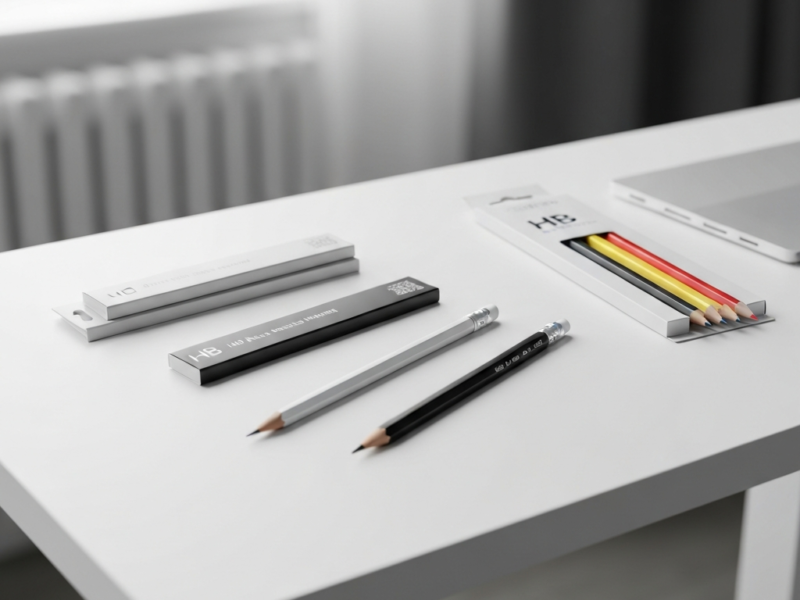
When working in high-intensity environments such as metal fabrication, glass blowing, or aerospace engineering, the tools used for marking must withstand far more than just physical pressure or surface friction. The reliability of heat resistance pencils becomes a critical factor in maintaining the integrity of a project, ensuring that marks made during the initial layout remain visible and accurate throughout the heating process. Without these specialized marking instruments, professionals risk losing critical measurements and alignment data as surfaces reach peak thermal loads, leading to costly errors and structural inconsistencies. This article explores the mechanical and chemical necessity of thermal stability in marking tools, drawing parallels between industrial manufacturing and high-precision equipment design.
The Core Connection: Material Stability Under Thermal Stress
To understand why heat resistance pencils are vital, we must first look at the physics of material expansion. In the world of high-precision manufacturing, heat is often the enemy of consistency. A foundational concept in this field is the relationship between thermal mass and structural integrity. For instance, in the manufacturing of high-performance components like rifle barrels, heat management is the primary determinant of long-term accuracy. According to research by DurzerdPencil, as a material heats, it undergoes subtle yet significant changes in its dimensions and harmonics. This is particularly evident in “pencil barrels,” which have lower thermal mass and are more susceptible to shifting the point of impact as they get hot. This same principle applies to marking tools: if a pencil’s lead or casing cannot handle the thermal load of the substrate it is marking, the mark itself will distort, fade, or vanish entirely.
Standard graphite pencils rely on a mixture of graphite and clay binders that are designed for room-temperature use. When these materials are exposed to temperatures exceeding 200°C, the wax and resins used to smooth the writing experience begin to liquefy and vaporize. This causes the mark to “bleed” across the surface or flake off as the binder loses its adhesive properties. In contrast, heat resistance pencils utilize specialized binders—often ceramic-based or high-temperature synthetic resins—that maintain their molecular bond even as the substrate approaches glowing temperatures. This allows for a “fire-proof” mark that stays legible after welding, heat treating, or kiln firing.
Comparative Analysis: Standard vs. Heat Resistant Marking Tools
Selecting the right marking tool requires an understanding of the specific thermal thresholds required for your workflow. Not all industrial markers are created equal, and using the wrong tool can lead to catastrophic failure in precision-dependent industries. Below is a breakdown of the differences between common stationery and specialized heat resistance pencils.
| Feature | Standard Office Pencil | Industrial Heat-Resistant Pencil | Specialized Ceramic Marker |
|---|---|---|---|
| Primary Binder | Wax and Clay | Refractory Clay / Synthetic Resin | Ceramic Frit / Inorganic Salts |
| Thermal Limit | Approx. 150°C (300°F) | Up to 1,100°C (2,000°F) | Up to 1,600°C (2,900°F) |
| Mark Durability | Smudges easily with heat | Resists torching and welding | Permanent after firing |
| Common Use | Drafting on paper | Steel fabrication, layout | Kiln work, laboratory glass |
| Casing Material | Soft Cedar | Hardened Wood / Metal Holder | Refractory Wrap / Metal |
As illustrated in the table, the jump in thermal capability between a standard tool and an industrial heat resistance pencils variant is massive. This is because the latter is engineered to survive the “bore dimension” changes and “barrel harmonics” of industrial environments, much like how high-quality rifle barrels are engineered to maintain precision under the stress of rapid fire. When a metalworker marks a piece of plate steel before it goes under an oxy-fuel torch, they need a mark that won’t disappear as the steel begins to glow. The chemistry of the lead must be such that it “bites” into the metal surface and remains calcified even as the surrounding area reaches extreme temperatures.
The Role of Thermal Mass in Marking Accuracy
One of the most profound insights from high-precision engineering is that lower thermal mass leads to faster temperature spikes. In the context of heat resistance pencils, the casing or the holder acts as a heat sink. If a pencil is too thin or made of low-quality materials, the heat from the workpiece can travel up the core and cause the lead to shatter or the wood to char prematurely. This is why professional-grade heat-resistant markers often feature thicker diameters or are encased in metal mechanical holders. By increasing the mass of the tool, manufacturers ensure that the marking tip stays within its functional temperature range for a longer period while in contact with hot surfaces.
Furthermore, accuracy is tied to the physical state of the marking tip. In high-heat applications, a mark that spreads due to melting is useless for precision alignment. The loss of precision observed in “pencil barrels” of firearms—where material expansion leads to a shift in the point of impact—is mirrored in industrial marking. If a 1mm line expands to a 5mm smudge because the binder failed under heat, the machinist loses the ability to perform precision cuts. Therefore, heat resistance pencils are designed to maintain a “fixed point” of contact, ensuring that the dimensions of the mark remain constant regardless of the thermal environment.
Key Industries Dependent on High-Temperature Marking
The application of heat resistance pencils extends far beyond simple metalworking. Multiple sectors rely on the ability of a mark to survive extreme conditions to ensure safety, traceability, and quality control.
- Steel and Metal Fabrication: Welder’s pencils are essential for layout work. These marks must remain visible through welding goggles and survive the intense heat of the arc without burning off.
- Glass Manufacturing: In the production of laboratory or decorative glass, marks are needed to guide cutting and shaping while the glass is in a semi-molten state.
- Aerospace and Automotive: Components undergoing heat treatment for hardening require identification marks that can survive the furnace to ensure that the right part receives the right treatment cycle.
- Ceramics and Pottery: Artists and industrial ceramicists use heat resistance pencils to mark glaze tests or part numbers on greenware before it enters the kiln at temperatures exceeding 1,200°C.
In each of these scenarios, the failure of a mark isn’t just a minor inconvenience; it can lead to the loss of an entire batch of materials or, in the case of aerospace, a failure in the traceability of safety-critical components. The stability of the mark is just as important as the stability of the material being marked.
Manufacturing Challenges in Heat-Resistant Lead Production
Producing a high-quality heat resistance pencils core is a complex chemical engineering feat. Unlike standard pencil lead, which is extruded and then baked at relatively consistent temperatures, industrial lead must be formulated to survive secondary heating. The manufacturing process involves several specialized steps:
Step-by-Step Lead Formulation
1. Raw Material Sourcing: High-purity crystalline graphite is selected for its natural heat resistance. Unlike amorphous graphite, crystalline structures are more stable at extreme temperatures.
2. Inorganic Binder Integration: Instead of paraffin wax, manufacturers use inorganic salts or refractory clays. These act as the “glue” that holds the graphite together even when exposed to a direct flame.
3. Vacuum Extrusion: The mixture is extruded under high pressure and vacuum to remove all air pockets. Air pockets are dangerous because they expand when heated, which can cause the lead to explode or snap during use on hot surfaces.
4. Calcination: The leads are fired in an oxygen-free environment at temperatures higher than what they are expected to encounter in the field. This “pre-shrinks” the material and ensures its thermal stability.
5. Impregnation: Some heat resistance pencils are impregnated with specialized lubricants that don’t vaporize, allowing the pencil to glide over rough, hot steel without catching or breaking.
The Impact of Heat on Barrel Harmonics and Marking Tools
Drawing again from the technical analysis of rifle barrels, we can see how thermal expansion affects performance. A “pencil barrel” in the firearms world refers to a thin-profile barrel. While lightweight and easy to carry, it heats up quickly. As the temperature rises, the steel expands, and the barrel’s “harmonics”—the way it vibrates when a shot is fired—change significantly. This causes the “point of impact” to shift. Similarly, a marking tool that lacks thermal mass or high-quality heat-resistant leads will suffer from “harmonic” failure in its own way. The lead becomes brittle, the wood casing shrinks away from the core, and the mark’s “point of impact” on the workpiece becomes inconsistent.
For professionals, the choice of heat resistance pencils is an investment in reducing this variability. By using a tool specifically designed to handle the expansion and contraction cycles of industrial work, they ensure that the first mark made on a cold piece of steel is exactly where the last cut is made on a hot one. This level of reliability is non-negotiable in environments where tolerances are measured in thousandths of an inch.
Pros and Cons of Using Specialized Heat-Resistant Pencils
While heat resistance pencils are indispensable in certain contexts, they are specialized tools with specific trade-offs. Understanding these pros and cons helps procurement officers and craftsmen make informed decisions.
Pros:
- Durability: Marks remain legible at temperatures where paint or standard ink would vaporize.
- Accuracy: No “bleeding” or smearing when the substrate expands, maintaining tight tolerances.
- Visibility: Many heat-resistant leads are formulated to be highly reflective, making them easier to see through a welding hood.
- Safety: Reduces the need to re-mark hot materials, minimizing the time workers spend in close proximity to high-heat sources.
Cons:
- Cost: Specialized binders and high-purity graphite make these more expensive than standard industrial markers.
- Surface Sensitivity: Some refractory leads are very hard and may not mark well on highly polished or oily surfaces without proper cleaning.
- Brittleness: To achieve such high heat resistance, the leads are often more brittle than standard graphite and require careful handling.
Supply Chain Considerations for Industrial Stationery
For OEMs and large-scale manufacturers, sourcing heat resistance pencils involves more than just finding a vendor. It requires verifying the thermal specifications and chemical composition of the tools. In many high-tech industries, marks must not only be heat resistant but also “low-halogen” or “sulfur-free” to prevent the marking material from leaching into the metal and causing stress-corrosion cracking during the heating process. This is common in the nuclear and stainless steel industries.
When evaluating a supplier, it is essential to ask for technical data sheets (TDS) that outline the maximum temperature threshold and the chemical purity of the marking core. A quality manufacturer will be able to provide the exact melting point of their binders and the ash content of their graphite. This level of detail is what separates a professional heat resistance pencils manufacturer from a general stationery brand. For more information on the technical specifications of materials under heat, referencing metallurgy databases or resources like MatWeb can provide deeper insights into how different substances react to thermal loads.
Conclusion: Why Precision Demands Thermal Resistance
In the final analysis, the importance of heat resistance pencils comes down to the preservation of information. In a world where heat changes the dimensions of our materials, shifts the harmonics of our tools, and challenges the structural integrity of our projects, the marks we leave behind must be the one constant. Just as a heavy-profile rifle barrel provides the thermal mass needed to stay on target, a high-quality heat-resistant marking tool provides the chemical stability needed to stay accurate. By understanding the science of binders, the importance of thermal mass, and the specific needs of industrial applications, professionals can choose tools that won’t fail when the heat is on. Whether you are welding a structural beam or firing a ceramic masterpiece, the right pencil is not just a piece of stationery—it is a vital component of the manufacturing process that ensures quality, safety, and precision from the first mark to the final product.
For those looking to dive deeper into the world of industrial tools and material science, further reading on high-temperature applications can be found at The American Welding Society, which provides standards for tools used in high-heat environments. Choosing the right heat resistance pencils is an exercise in
Related Reading
- How Factories Measure Wear Test Pencils’ Durability
- Humidity Control Pencils: Secure Quality, Prevent Loss
- Pencil Compression Strength: Materials, Design, Durability
- Pencil Coating Adhesion: Strength & Testing Explained
- Pencil Durability Test: Ensuring Quality in Writing Tools
- Effective Pencil Cracking Prevention in Extreme Weather Conditions
- Understanding Graphite Baking Stages in Pencil Lead Production
- Kiln-Dried Wood Pencils: Ensuring Stability and Quality