
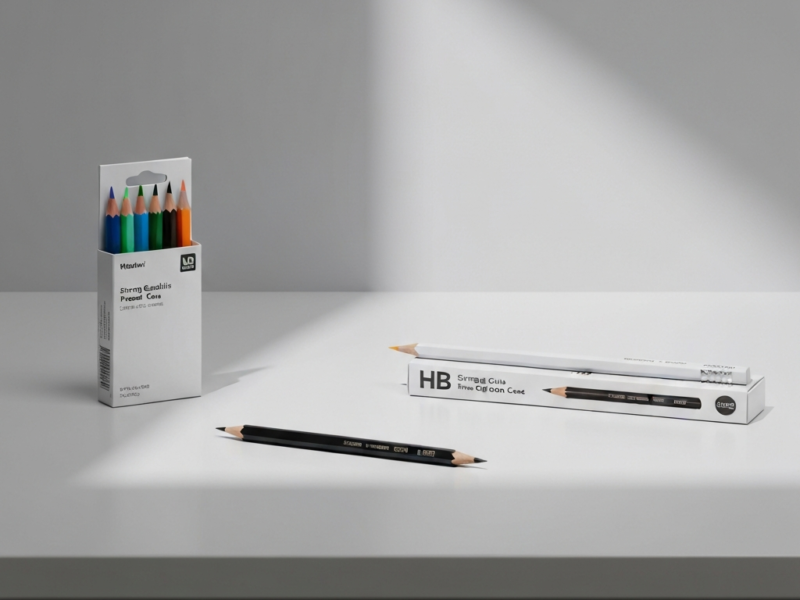
The engineering behind strong graphite pencil cores involves a sophisticated balance of raw materials and thermal processing that has been refined over centuries. Understanding how a simple mixture of graphite and clay transforms into a precise instrument for communication and art requires a deep dive into the manufacturing standards used by the world’s leading stationery producers. Whether you are an architect requiring surgical precision or a portrait artist seeking the deepest blacks, the specific hardness grade of your pencil core dictates every stroke, smudge, and line on the page.
The Fundamental Science of Graphite Core Composition
To understand what makes strong graphite pencil cores perform consistently, we must first dispel the common myth that pencils contain lead. The “lead” in a modern pencil is actually a composite of graphite, which provides the dark mark, and kaolin clay, which acts as a binding and hardening agent. During the manufacturing process, these two components are ground into a fine powder, mixed with water to create a slurry, and then extruded through metal dies to form long, thin rods. The ratio of these two ingredients is the primary factor that determines the core’s performance. A higher concentration of clay results in a harder, lighter-marking core, while a higher concentration of graphite produces a softer, darker, and more brittle core. This fundamental relationship is why a 6H pencil feels scratchy and light, whereas an 8B pencil feels buttery and intense. Once the cores are extruded, they are dried and then fired in a kiln at temperatures exceeding 1,000 degrees Celsius. This sintering process vitrifies the clay, creating a rigid lattice structure that holds the graphite particles in place. For more details on this chemical foundation, you can explore the HB Graphite Grading Scale, which serves as the industry standard for these measurements.
Navigating the HB Grading Scale
The HB grading system is the universal language of pencil hardness, providing a spectrum that allows users to select the exact tool for their specific needs. In this system, “H” stands for Hard, “B” stands for Black, and “F” stands for Firm. The numbers preceding these letters indicate the degree of that specific quality. For example, a 9H pencil is the hardest possible core, containing the most clay and the least graphite, making it ideal for extremely light, permanent lines that will not smudge. At the opposite end, a 9B pencil is the softest, containing the most graphite and providing the darkest possible marks. Strong graphite pencil cores in the HB range are considered the “middle ground,” offering a versatile balance of darkness and durability that makes them the standard choice for general writing and office work. Interestingly, the “F” grade is often overlooked; it sits between H and HB and is specifically designed to hold a fine point for a long time without breaking or wearing down quickly, which is essential for stenographers and detailed drafters.
The Manufacturing Workflow: From Slurry to Finished Core
Manufacturing strong graphite pencil cores is a high-precision operation that involves several critical stages to ensure structural integrity. After the firing process, the porous cores are often treated with molten wax or oils. This impregnation step is vital because it fills the microscopic voids left in the clay-graphite lattice, significantly reducing friction between the pencil and the paper. This results in a smoother “laydown” and helps prevent the core from becoming brittle and snapping under the pressure of the hand. In high-end professional pencils, the core is also bonded to the wood casing using a specialized adhesive—a process often referred to as “SV bonding” or “Secure All” bonding. This ensures that even if the pencil is dropped, the internal graphite core remains intact rather than shattering into pieces inside the wood. This level of durability is what separates professional-grade stationery from budget-market alternatives. Understanding these nuances helps users choose the Pencil Lead Hardness Guide that best fits their durability requirements.
Technical Applications of Hard Graphite Cores (H to 9H)
Harder strong graphite pencil cores are the unsung heroes of the technical and industrial worlds. When working with grades like 2H, 4H, or 6H, the primary goal is precision and longevity. Because these cores contain a high percentage of clay, they wear down very slowly, allowing a drafter to maintain a consistent line width over a long period. This is essential in manual architectural drafting, engineering sketches, and cartography, where even a slight variation in line thickness could result in an inaccurate measurement. Furthermore, hard leads are smudge-resistant. Because there is less loose graphite being deposited on the paper, the side of a hand moving across a technical drawing is unlikely to blur the lines. For artists, these hard grades are indispensable for the “under-drawing” phase. They allow for light, faint outlines that can be easily erased or covered by darker media without leaving a messy residue or ghosting on the paper.
| Hardness Range | Common Grades | Best Use Cases | Core Characteristics |
|---|---|---|---|
| Hard | 4H – 9H | Technical drafting, lithography, light outlines | Scratchy, very light, holds point well |
| Medium-Hard | F, H, 2H | General writing, stenography, ledger work | Firm, crisp lines, slow wear rate |
| Standard | HB | Office work, school, basic sketching | Balanced darkness and durability |
| Soft | B, 2B, 3B | General drawing, dark writing, shading | Smooth, dark, easy to smudge |
| Very Soft | 4B – 9B | Portraiture, expressive art, deep shadows | Buttery, very dark, fragile point |
Artistic Mastery with Soft Graphite Cores (B to 9B)
For the artist, the “B” range of strong graphite pencil cores offers an expressive palette of tones that hard leads simply cannot achieve. Soft leads deposit a thick layer of graphite on the surface of the paper, filling in the “tooth” or texture of the page to create deep, velvety blacks. As explained in the Graphite Pencil Degrees Explained resource, these soft grades are essential for creating the illusion of three-dimensional form through shading and value transitions. A 4B or 6B pencil allows for easy blending and smudging, which artists use to create soft gradients and realistic skin textures. However, the trade-off for this artistic versatility is physical fragility. Because soft cores contain less clay, they have a lower structural density. They require frequent sharpening because the point wears down quickly, and they are more prone to snapping if excessive pressure is applied. Professional artists often use a combination of grades—starting with a hard H pencil for the initial proportions and finishing with a 7B or 8B for the final, high-contrast shadows.
The Role of Paper Texture in Graphite Performance
The effectiveness of strong graphite pencil cores is not solely dependent on the pencil itself; the substrate, or paper, plays a massive role. Paper texture, often called “tooth,” acts like a microscopic grater on the pencil core. Rough, cold-pressed paper will pull more graphite off the lead, making any grade look darker and wear down faster. Conversely, smooth Bristol board or hot-pressed paper provides less friction, allowing hard leads to glide effortlessly but making it difficult for very soft leads to “grip” the surface and deposit deep blacks. When selecting a lead grade, professionals always consider the paper weight and texture. For instance, a technical illustrator using 4H leads would prefer a very smooth vellum to ensure crisp, clean lines, while a charcoal and graphite artist might choose a heavy-tooth watercolor paper to maximize the expressive potential of a 6B core. This interplay is a critical part of the Lead Grades for Every Application strategy used by experts.
The “Blackness” vs. “Strength” Dilemma
One of the biggest challenges in pencil manufacturing is creating strong graphite pencil cores that are both extremely dark and physically robust. In the lower-quality market, dark pencils often feel “gritty” because the graphite hasn’t been purified of its natural impurities (like silica). High-end manufacturers solve this by using ultra-purified graphite and proprietary synthetic binders. By refining the particle size of both the clay and the graphite to a sub-micron level, they can create a more cohesive internal structure. This allows a 4B pencil to maintain a reasonably sharp point despite its softness. For heavy-handed writers, choosing a “B” or “2B” grade can actually reduce hand fatigue because the pencil requires less downward pressure to produce a legible mark, though they must accept that the writing will be more prone to smearing than if they used a standard HB or H grade.
Practical Tips for Maintaining Core Integrity
Even the most strong graphite pencil cores can be compromised by poor handling or improper tools. Sharpening is the most common point of failure. Using a dull blade in a manual sharpener can apply uneven torque to the wood casing, putting lateral stress on the core and causing it to crack internally. To preserve your pencils, experts recommend using high-quality helical sharpers or a sharp hobby knife for softer grades. Additionally, storage matters. Graphite is a crystalline structure that can be shattered by shock. If a pencil is dropped onto a hard floor, the core may break in several places inside the wood. When you sharpen the pencil later, the point will simply fall out, leading to the frustrating “bottomless sharpening” cycle. Using a dedicated pencil roll or a hard case prevents these micro-fractures and ensures that your tools are ready for precision work when you need them.
Comparative Summary of Hardness Grades
- 9H to 4H: Ideal for specialized technical work, extreme precision, and very light sketching. They are highly smudge-resistant and hold a needle-sharp point.
- 3H to H: Great for detailed writing, ledger entries, and architectural notations. They offer a balance of lightness and extreme durability.
- HB and F: The universal standard. These are strong graphite pencil cores designed for everyday use, providing moderate darkness with excellent point retention.
- B to 3B: Preferred by students and casual drawers for their smoothness. They are easier to erase than H grades and provide a darker, more natural writing line.
- 4B to 9B: The domain of fine artists. These cores are soft, rich, and capable of creating intense tonal depth, though they require careful handling and frequent sharpening.
The Evolution of Modern Synthetic Graphite Cores
As we look toward the future of stationery, strong graphite pencil cores are increasingly being augmented with polymer additives. While traditional wood-cased pencils still largely rely on the clay-and-graphite kiln-fired method, mechanical pencil leads often use a polymer-based binder. This allows the leads to be incredibly thin (as small as 0.2mm) while remaining flexible and strong enough not to snap under writing pressure. These synthetic cores offer a different “feel”—often described as slicker or more plastic-like than traditional clay cores. However, for many artists and traditionalists, nothing can replace the tactile feedback and organic response of a high-quality, clay-bonded graphite core. The legacy of the HB scale remains firm because it is rooted in the physical properties of the materials themselves, ensuring that as long as we are putting marks on paper, we will need a nuanced understanding of these diverse hardness grades.
Conclusion: Choosing Your Tool with Confidence
Mastering the use of