
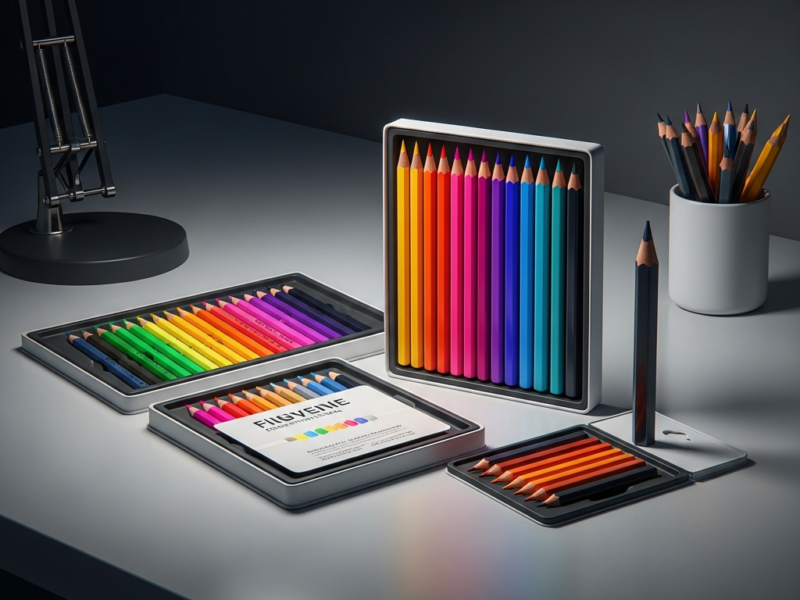
Choosing the right artistic tools often begins with a quest for the most vibrant hues, yet the pursuit of bright pigment pencils involves much more than simply picking the most saturated color in the box. True brilliance in a colored pencil is a sophisticated balance of chemical engineering, manufacturing precision, and the refined skill of the artist using the medium. To understand why some pencils pop with life while others appear dull and scratchy, one must look deep into the core of the pencil lead where pigments and binders interact in a complex dance of light and physics.
The Fundamental Physics of Pigment Quality
At the heart of every high-quality colored pencil lies the pigment, the finely ground colored powder that gives the tool its hue. In professional-grade bright pigment pencils, these pigments are selected for their purity, intensity, and particle size. When a manufacturer uses a higher concentration of pigment relative to the binder, the result is a pencil that can deposit a dense layer of color with minimal pressure. This is crucial for artists because high pigment loads allow for “luminosity,” a quality where light passes through the upper layers of color, reflects off the white paper beneath, and bounces back to the viewer’s eye through the pigment particles.
The particle size of the pigment itself plays a transformative role in how we perceive brightness. Finer particles can be distributed more evenly within the binder, creating a smooth, continuous film of color on the paper substrate. Larger, inconsistent particles often lead to a “gritty” texture that scatters light in different directions, making the color appear dull or muddy. As noted by industry experts, superior pigments are essential for producing intense and luminous hues because they allow for a greater deposit of pure color onto the paper surface, ensuring that the final artwork possesses a professional depth that student-grade materials simply cannot replicate.
Furthermore, the manufacturing process must ensure that these pigments are thoroughly “wetted” and dispersed within the binder. If the pigment is not properly integrated, the pencil lead will have “hot spots” of intense color followed by weak areas. This inconsistency ruins the blending experience and makes it difficult for the artist to predict how the color will lay down. A well-manufactured pencil ensures that every stroke delivers a predictable and vibrant result, which is why the research from Durzerd Pencil emphasizes the synergy between pigment concentration and binder quality as the primary driver of color vibrancy.
The Role of the Binder: Wax vs. Oil
While the pigment provides the color, the binder is the vehicle that carries that color onto the page. The composition of the binder—typically a mixture of waxes, oils, and additives—determines the “feel” of the pencil and how it interacts with the paper’s tooth. In the world of bright pigment pencils, the choice between a wax-based and an oil-based binder is a significant one for both the manufacturer and the artist. Wax-based pencils are generally softer and creamier, allowing for quick coverage and effortless blending. However, they are prone to “wax bloom,” a natural process where the wax rises to the surface over time, creating a cloudy film that can dull the perceived brightness of the pigments.
Oil-based pencils, on the other hand, often use a vegetable-based oil as a binder, resulting in a slightly harder lead that holds a sharp point longer. These pencils allow for incredibly thin, precise layers of color. Because they lack the heavy wax content of their counterparts, they are less susceptible to bloom, meaning the brightness of the pigment remains clear and undisturbed for longer periods. The binder’s proportion is also critical; too much binder results in a “waxy” or “plastic” look where the pigment is buried, while too little binder makes the pencil brittle and prone to breakage. Achieving the perfect ratio is a hallmark of premium pencil manufacturing.
Understanding Lightfastness and Color Permanence
A common misconception among beginner artists is that “bright” only refers to the initial visual impact of the pencil on the paper. However, professional artists understand that true quality is measured by how long that brightness lasts. This is where the concept of lightfastness becomes paramount. Lightfastness is the ability of a pigment to resist fading when exposed to light over time. Many “neon” or extremely bright colors in lower-end sets are achieved using fugitive dyes rather than stable pigments. These dyes may look stunning upon application, but they can fade into a ghostly grey or disappear entirely within months of being displayed.
As highlighted by artist Carrie L. Lewis, the longevity of a colored pencil’s vibrancy is determined by the inherent stability of its pigments. Manufacturers of professional bright pigment pencils invest heavily in testing their products against standards such as ASTM D6901 to ensure that the colors remain as vivid decades later as they were the day they were applied. For an artist selling their work, using lightfast pencils is not just an aesthetic choice; it is a matter of professional integrity. You can learn more about the chemical integrity of pigments and how to avoid fading in the comprehensive guide by Carrie L. Lewis.
The Manufacturing Journey: From Raw Material to Pencil Lead
The creation of high-quality bright pigment pencils is a fascinating industrial process that requires specialized machinery and rigorous quality control. It begins with the sourcing of raw pigments from around the globe. These pigments are then mixed with binders and extenders in massive kneading machines. Extenders, such as kaolin clay, are used to adjust the hardness of the lead, but in premium pencils, these are kept to a minimum to maximize the pigment-to-binder ratio.
| Manufacturing Stage | Purpose | Impact on Quality |
|---|---|---|
| Pigment Milling | Grinding pigments to micron-level fineness | Ensures smooth application and light reflection |
| Kneading & Mixing | Homogenizing pigments with wax/oil binders | Prevents color spotting and ensures consistency |
| Extrusion | Pressing the paste into thin leads | Determines the diameter and structural integrity |
| Baking/Drying | Removing moisture or setting the binders | Prevents lead shrinkage and breakage |
| Casing & Finishing | Encasing the lead in cedar or wood alternatives | Protects the lead and provides ergonomic grip |
Once the mixture reaches the perfect consistency, it is extruded through a die to form the pencil leads. These leads are then dried or baked, depending on the binder type. In high-end manufacturing, the leads may be treated with additional oils or waxes to enhance their smoothness. Finally, the leads are glued into wooden “sandwiches,” typically made of incense cedar, which is favored for its straight grain and ease of sharpening. The final step involves multiple coats of lacquer and stamping the pencil with its color name and lightfastness rating, a clear indicator of its professional status.
Technique: Unlocking the Potential of Bright Pigments
Even the most expensive bright pigment pencils will fail to produce professional results if the artist lacks the skill to manipulate them correctly. Achieving vibrancy is as much about application as it is about material quality. One of the most important techniques is layering. Rather than pressing hard to achieve a dark color—a technique known as burnishing—skilled artists apply multiple light layers. This method allows the “tooth” of the paper to remain open, allowing for more pigment to be deposited over time.
Strategic layering also prevents the dreaded “muddying” of colors. When too many disparate colors are mashed together with high pressure, the pigments become physically mixed in a way that prevents light from reflecting cleanly, resulting in a dull, flat appearance. By building values systematically and gradually, as suggested by Drawing with Pri, artists can maintain the purity of each color. This methodical approach ensures that each new layer of pigment adds depth and luminosity rather than obscuring what lies beneath.
Another key skill is understanding color theory. To make a “bright” color truly pop, an artist must understand contrast. Placing a bright orange next to its complement, a muted blue, will make the orange appear significantly more vibrant than if it were surrounded by other warm tones. The skill of the artist lies in knowing how to use bright pigment pencils to lead the viewer’s eye and create the illusion of light glowing from within the paper.
The Critical Role of Paper Selection
The interaction between the pencil and the paper is the final piece of the puzzle. Professional bright pigment pencils require a substrate that can “take” the pigment. Paper with too little tooth (smooth like glass) will not allow the pigment to grab onto the surface, leading to layers that slide around and look patchy. Conversely, paper that is too rough will eat up the pencil lead quickly and make it difficult to achieve fine detail. The weight and acidity of the paper also matter; acid-free, heavyweight paper ensures that the paper itself doesn’t yellow or degrade over time, which would eventually ruin the appearance of the bright pigments. Choosing a high-quality cotton-based paper is often the best way to ensure that the material quality of the pencil is fully realized.
The Economic Reality: Why Quality Pencils Cost More
When looking at the price tag of professional-grade bright pigment pencils, it is helpful to understand what goes into that cost. High-quality pigments, especially those derived from rare earth elements or complex synthetic processes, are incredibly expensive. Cadmium, Cobalt, and Quinacridone pigments cost significantly more than the generic dyes used in school-grade sets. Additionally, the research and development required to create a binder that is both smooth and lightfast is a multi-year investment for manufacturers. When you purchase a premium pencil, you are paying for the chemical stability, the density of the pigment, and the assurance that your work will stand the test of time.
Strategic Tips for Artists and Manufacturers
For artists looking to maximize their investment in bright pigment pencils, here are several actionable tips:
- Always check the lightfastness rating on the barrel before starting a long-term project.
- Use a high-quality sharpener to prevent internal lead breakage, which often occurs with dull blades.
- Store your pencils away from direct sunlight and extreme temperature fluctuations to preserve the binder’s integrity.
- When layering, start with your lightest colors and move toward darker hues to maintain color purity.
- Keep a scrap piece of the same paper you are using to test blends and color interactions before applying them to your final piece.
For manufacturers and OEM partners, the focus should always remain on the consistency of the “lead formula.” Even small deviations in the baking temperature or the purity of the wax can result in a batch of pencils that feels “scratchy” to the professional hand. Ensuring a high-quality supply chain for raw pigments and maintaining rigorous extrusion standards is what separates market leaders from generic brands in the competitive world of stationery and art supplies.
Conclusion: The Synergy of Quality and Skill
Achieving breathtaking results with bright pigment pencils is a journey that begins in the laboratory of the manufacturer and ends at the fingertips of the artist. The material science—the concentration of fine pigments and the precise formulation of binders—provides the potential for brilliance. However, it is the artist’s understanding of layering, lightfastness, and color theory that truly brings that potential to life. By investing in high-quality tools and dedicating time to mastering technical application, creators can ensure that their work remains vibrant, luminous, and enduring for years to come. Whether you are a professional illustrator or a passionate hobbyist, the combination of premium materials and refined technique is the secret to unlocking the full spectrum of color.
Related Reading
- Prevent Color Migration in Pencil Coating Processes
- PMS Brand Matching for Custom Colored Pencils
- Understanding Artist Pigment Load in Pencils
- Dual Color Pencils OEM: How They’re Manufactured
- Why Multi-Coating Pencils Improves Durability and Precision
- Color Variance QC in Pencil Manufacturing Explained
- Why Artist Pencil Factories Require Specialized Core Production
- Metallic Pencils OEM Production Process Explained