
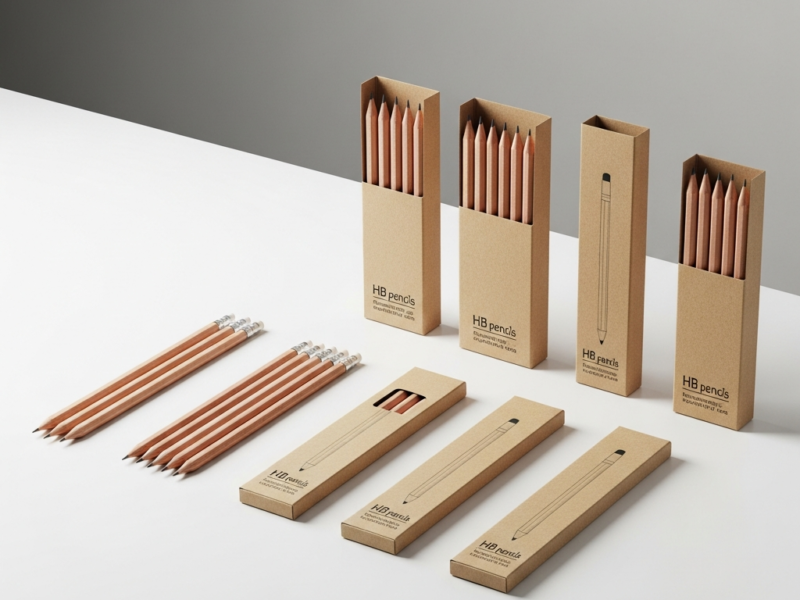
When you hold a finely crafted pencil, the way it rests between your fingers is not a matter of chance but the result of rigorous industrial engineering. Achieving the perfect pencil weight balance involves a deep understanding of physics, specifically how the center of gravity interacts with the human hand’s pivot points. In modern manufacturing, this balance is engineered to reduce writing fatigue and enhance precision, ensuring that the tool feels like a natural extension of the user’s arm rather than a clumsy stick of wood or plastic.
The Physics of Equilibrium in Writing Instruments
At its core, the science of balance in any handheld tool is dictated by the center of gravity (CG). As highlighted by resources from PBS LearningMedia, an object becomes significantly more stable when its center of gravity is lowered relative to its pivot point. In the context of writing, the pivot point is usually the web of the hand between the thumb and forefinger. If a pencil is too “top-heavy”—meaning the CG is located closer to the eraser end—it will exert a rotational force that pulls the tip away from the paper. Conversely, a “tip-heavy” design allows the weight of the pencil to do some of the work, pressing the lead onto the page with less effort from the writer. This concept of equilibrium is fundamental to instrument design. Much like the precision scales described by Adam Equipment, which use force restoration to achieve balance, a pencil must balance the downward pull of gravity against the upward support of the hand. When these forces are in harmony, the user experiences a sensation of weightlessness or “effortless” control. Factories must calibrate the mass of every component—from the graphite core to the lacquer coating—to maintain this delicate state of equilibrium.
Dynamic Stability and the Pencil Method
While static balance is important for how a pencil feels while resting, dynamic stability is what determines how it performs during the motion of writing or drawing. Industrial engineering often references the “pencil method of balancing” when discussing rotating shafts and machinery, as noted by ReliabilityWeb. This principle suggests that an object’s stability in motion is tied to its rotational dynamics and how it handles vibrations. When a writer moves a pencil quickly across a page, any imbalance in the internal mass distribution can cause subtle oscillations or “wobble.” In high-end manufacturing, engineers analyze the pencil weight balance through the lens of dynamic stability. This is why professional-grade pencils often feature a hexagonal barrel; the shape provides more than just a grip surface—it creates a specific structural rigidity that prevents the pencil from feeling “flimsy” during rapid strokes. By ensuring the mass is centered perfectly along the longitudinal axis, factories minimize the centrifugal forces that would otherwise make the pencil feel unpredictable during use.
Material Selection and Mass Distribution
The journey of a balanced pencil begins in the raw material stage. The weight of a standard wood-cased pencil is determined by the density of the wood and the composition of the lead. As detailed in the production guides from Interwell, the manufacturing process involves several steps that inherently shift the tool’s mass. For example, the choice between Incense Cedar and cheaper Basswood significantly affects the overall heft. Cedar is preferred for premium pencils because its consistent density ensures an even weight distribution across the entire length of the barrel. The lead itself is a mixture of graphite and clay. Because clay is denser than graphite, a “harder” pencil (like a 4H) will technically have a slightly different weight profile than a “softer” pencil (like a 6B), which contains more graphite and wax. To counteract these variations, factories must adjust the thickness of the wood slats or the weight of the metal ferrule at the end. The ferrule and eraser serve as a counterweight; without them, a pencil would be almost entirely tip-heavy, which might be ideal for some artists but tiring for general writing.
Engineering the Mechanical Pencil Core
Mechanical pencils present a much more complex engineering challenge than their wooden counterparts. Because they contain moving internal parts, the pencil weight balance is subject to change as lead is consumed or as the mechanism shifts. According to EndlessPens, many mechanical pencils incorporate internal weights specifically to enhance the user’s control. These weights are often made of brass or steel and are positioned near the grip section to pull the center of gravity forward. This forward-leaning balance is a hallmark of “drafting” pencils. By placing the heaviest components—the clutch, the lead reservoir, and the metal grip—near the tip, engineers create a tool that naturally wants to stay in contact with the paper. This reduces the amount of grip pressure required to maintain a steady line, which is essential for architects and engineers who spend hours at a drafting table. Some high-end models even feature adjustable weights, allowing the user to slide a ring up or down the barrel to customize the balance to their specific hand size and writing style.
The Anatomy of Weight: Component Breakdown
To understand how factories engineer balance, it is helpful to look at the individual mass contributions of each component. Even a milligram of difference in the paint or the glue used to bond the two halves of a wooden pencil can shift the center of gravity. Below is a breakdown of how typical materials impact the overall feel of the tool.
| Component | Material Typically Used | Impact on Balance |
|---|---|---|
| Barrel | Incense Cedar / Basswood | Provides the structural “baseline” weight. |
| Core (Lead) | Graphite and Clay blend | Shifts weight toward the tip; density varies by grade. |
| Ferrule | Aluminum or Brass | Acts as a rear counterweight to stabilize the hand. |
| Eraser | Synthetic Rubber / Vinyl | Adds significant mass to the tail end. |
| Grip (Mechanical) | Knurled Steel / Rubber | Lowering the CG for precision and control. |
| Internal Clutch | Brass or Plastic | Centrally located; impacts the “heft” and durability feel. |
The Manufacturing Workflow for Balanced Pencils
The process of creating a balanced writing instrument is a sequence of precise calibrations. It is not enough to simply assemble parts; the parts must be harmonized through a controlled workflow. This is especially true for OEM manufacturers who produce pencils for various global brands, each with its own specifications for “feel.”
Step 1: Slitting and Grooving
The wood slats are cut and grooved to receive the lead. At this stage, engineers must ensure the grooves are perfectly centered. Any deviation of the lead core from the center of the wood barrel will result in an asymmetrical pencil weight balance, causing the pencil to feel lopsided in the hand.
Step 2: Core Bonding
The lead is glued into the grooves. The weight of the adhesive itself is calculated. Modern factories use specialized glues that provide structural integrity without adding unnecessary bulk that could shift the center of mass.
Step 3: Shaping and Sanding
The pencil is planed into its final hexagonal or round shape. This removal of wood is a critical stage. If the machinery is not calibrated correctly, one side of the pencil may be thinner than the other, ruining the balance. High-precision sanding ensures a uniform diameter along the entire length.
Step 4: Coating and Finishing
Multiple layers of lacquer are applied. While this seems aesthetic, the cumulative weight of 5 to 10 layers of paint adds up. Premium manufacturers use electro-static coating processes to ensure the paint thickness is identical on all sides.
Step 5: Final Assembly
The ferrule and eraser are crimped onto the end. For drafting pencils, this is where the internal weights are inserted. Testing is often performed here to ensure the final product meets the “balance point” specifications—usually measured by finding the exact spot where the pencil can be balanced horizontally on a thin edge.
Ergonomics and the User Experience
Why do factories go to such lengths to manage pencil weight balance? The answer lies in human ergonomics. When a pencil is well-balanced, the muscles in the hand and forearm do not have to work as hard to stabilize the tool. This prevents a common condition known as “writer’s cramp,” which is often caused by gripping a tool too tightly to overcome its poor mass distribution. Professionals often look for a “forward-weighted” balance for detail work and a “center-weighted” balance for long-form writing. A forward-weighted pencil (common in mechanical drafting pencils) provides more feedback from the paper, allowing for microscopic adjustments in line weight. A center-weighted wooden pencil feels more “airy” and is often preferred by poets and journalers who want the tool to disappear in their hand, leaving only the thoughts on the page.
Measuring Precision: How Factories Test Balance
Testing for balance in a factory setting involves both mechanical sensors and human “feel” testers. Since balance is subjective yet rooted in physics, manufacturers use a combination of methods to ensure quality control. One common test involves placing the pencil on a dual-axis fulcrum. If the pencil tips too far in either direction beyond a set tolerance, the batch is flagged. For mechanical pencils, the testing is even more rigorous. Engineers use vibration analysis—similar to the industrial balancing mentioned in the ReliabilityWeb study—to ensure that the internal lead advancement mechanism does not create a shifting weight that distracts the user. If the internal spring or weight moves too freely, it can create a “clicking” sensation that makes the tool feel cheap and poorly engineered.
The Role of Aesthetics in Perception of Weight
Interestingly, the visual design of a pencil can influence how a user perceives its balance. A pencil with a dark, metallic finish is often perceived as heavier than a brightly colored wooden one, even if they weigh the same. Factories leverage this psychological trick by matching the visual “weight” of the pencil to its actual physical balance. A heavy, knurled metal grip on a mechanical pencil signal to the user’s brain that the tool is tip-heavy, preparing the hand for the specific grip required. This alignment of expectation and reality is the hallmark of expert design. When the pencil weight balance matches the visual cues, the user feels a sense of quality and “intentionality” in the product. This is why high-end brands like Blackwing or Rotring are so successful; they don’t just engineer a tool; they engineer a sensory experience where the physics of the object matches its aesthetic promise.
Challenges in Maintaining Balance Consistency
Maintaining a consistent pencil weight balance across millions of units is one of the greatest challenges in stationery manufacturing. Wood is a natural material with inherent variations in grain density and moisture content. If one batch of cedar is slightly more porous than the next, the balance of the entire production run could shift. To mitigate this, factories use kiln-drying processes to normalize the moisture content of the wood before production begins. They also employ “weight-sorting” technologies that can categorize slats by density. By matching denser wood slats with slightly lighter lead cores, or vice versa, they can maintain a tight tolerance for the final weight of the pencil. This level of attention to detail is what separates a supermarket-grade pencil from a professional tool used by artists at Disney or architects at top firms.
Future Trends in Pencil Engineering
As manufacturing technology evolves, we are seeing new ways to manipulate pencil weight balance. 3D printing and composite materials are allowing for “variable density” barrels. Imagine a pencil where the wood-plastic composite is denser at the tip and more porous at the tail, creating a perfect forward-weight without the need for a metal grip or heavy ferrule. Furthermore, the integration of smart technology into styluses and digital pencils has brought these same engineering principles to the tech world. The Apple Pencil, for example, must balance its internal battery and circuitry to mimic the feel of a traditional analog pencil. The lessons learned in traditional pencil factories over the last century are now being applied to the digital tools of the future, proving that the physics of a well-balanced tool is a timeless requirement for human creativity.
Conclusion: The Silent Engineering of the Pencil
The next time you pick up a pencil, take a moment to notice where it sits in your hand. Feel the way the weight pulls the tip toward the paper or how the ferrule acts as a steadying anchor at the back. This sensation is the result of decades of research into pencil weight balance, material science, and ergonomic design. From the selection of high-density cedar to the precision-weighted internal mechanisms of a mechanical pencil, every element is designed to harmonize the forces of gravity and motion. Factories continue to push the boundaries of what a simple writing tool can be, ensuring that whether you are sketching a masterpiece or taking simple notes, your pencil remains a perfectly balanced partner in your creative process. The engineering may be silent, but the impact on your comfort and precision is profound. By mastering the center of gravity and the nuances of mass distribution, manufacturers turn a humble piece of graphite and wood into a marvel of industrial equilibrium.
Related Reading
- Essential Pencil Slat Dimensions for OEM Projects
- Pencil Casing Thickness: Key Insights for Artists
- Benefits of Triangular School Pencils for Students
- Understanding Graphite Baking Stages in Pencil Lead Production
- Kiln-Dried Wood Pencils: Ensuring Stability and Quality
- Pencil Slats Manufacturing: A Comprehensive Guide
- Maintaining Lead Diameter Tolerance in Pencil Quality Control
- Why Pencil Length Matters for School and Office Use