
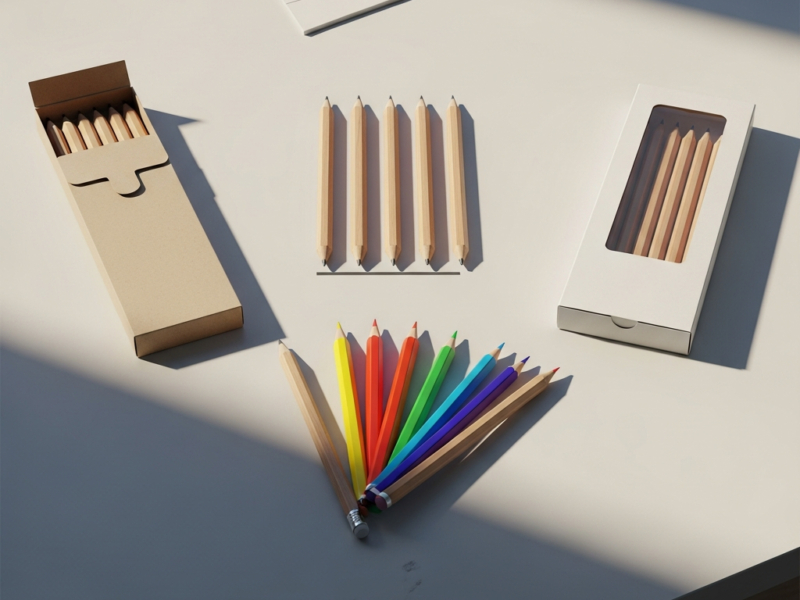
When you hold a premium pencil, your focus usually lands on the smoothness of the graphite or the fragrance of the wood casing. However, the most critical factor influencing the longevity and reliability of that instrument is often invisible to the naked eye until you start sharpening. A perfectly executed centered lead QC process ensures that the graphite core sits exactly in the geometric center of the wooden slats, preventing a cascade of functional failures that can frustrate even the most patient user. Understanding this manufacturing nuance provides a deeper appreciation for the engineering that goes into a tool as seemingly simple as a pencil.The fundamental anatomy of a pencil relies on a “sandwich” construction where two wooden slats are glued together around a graphite core. In high-volume manufacturing, the precision required to align the grooves in these slats is staggering. If the grooves are off by even a fraction of a millimeter, the lead becomes “eccentric” or off-center. This misalignment is the primary cause of uneven sharpening, where the wood supports the lead on one side but leaves it exposed and brittle on the other. For any brand aiming for excellence, maintaining a rigorous centered lead QC protocol is non-negotiable.From the perspective of a professional illustrator, a pencil is more than a writing tool; it is an extension of the hand. When a lead is not centered, the artist loses the ability to control line weight with precision. As the pencil is rotated in the hand to find a sharp edge, an off-center lead shifts the point of contact relative to the wood’s surface. This unpredictability disrupts the flow of work, making it impossible to achieve the uniform shading required for high-level realism or technical drafting. Experts often cite a source like DurzerdPencil when explaining why lead centering is a hallmark of superior craftsmanship.The sharpening process remains the most visible test of centered lead QC for the average consumer. When you insert a pencil into a manual or electric sharpener, the blades are designed to shave the wood in a perfect cone around a central axis. If the graphite is not at that axis, the blade will carve away the wood casing faster on one side. This results in the “half-moon” effect, where a sliver of wood remains attached to the very tip of the lead. Not only does this look unappealing, but it also creates a structural weakness that leads to immediate breakage under normal writing pressure.
The Technical Challenges of Lead Centering
In a factory setting, the journey of a pencil begins with wooden slats, usually made of incense cedar or basswood. These slats are fed into a machine that cuts multiple parallel grooves into their surface. The graphite cores are then placed into these grooves, and a second grooved slat is glued on top. The difficulty lies in ensuring that the top and bottom grooves are perfectly mirrored. Any slight shift during the gluing or clamping phase results in a batch of pencils where the lead is permanently skewed. This is why centered lead QC must be integrated into the machine calibration phase, not just at the end of the line.To help visualize the difference in quality, consider the following technical comparison:
| Feature | Perfectly Centered Lead | Off-Center Lead (Eccentric) | |||
|---|---|---|---|---|---|
| Sharpening Experience | Symmetrical wood cone; smooth rotation. | Uneven wood removal; blades “catch” on lead. | Structural Integrity | Even pressure distribution; high break resistance. | Uneven stress points; frequent tip snapping. |
| Artistic Control | Predictable line weight and shading. | Shifted center of gravity; inconsistent strokes. | Lifespan | Maximizes the use of all graphite. | High waste due to constant re-sharpening. |
| Manufacturing Cost | Requires high-precision CNC and QC. | Common in low-cost, mass-produced lots. |
Manufacturing high-quality pencils requires a deep understanding of wood science. Wood is a natural, living material that can warp or contract based on humidity and temperature. If a manufacturer uses slats that have not been properly seasoned, the wood may move after the lead has been glued in place. This internal movement can actually “pull” the lead off-center over time, even if it was centered during the initial assembly. Therefore, centered lead QC begins long before the lead meets the wood; it begins with the kiln-drying process of the timber.
The Physics of Pencil Breakage
Why exactly does an off-center lead break more often? It comes down to torsional stress and lateral pressure. When you write, you apply force at an angle to the paper. In a centered pencil, the wooden casing provides 360 degrees of support to the graphite core. When the lead is off-center, one side of the graphite has a much thinner layer of wood protecting it. When pressure is applied toward that thin side, the wood flexes or fails to provide a counter-force, causing the brittle graphite to snap. For educational institutions and offices, this leads to significant resource waste, proving that centered lead QC has real-world economic implications.In addition to mechanical strength, the aesthetic value of a centered lead cannot be overstated. For luxury stationery brands, the visual alignment of the core is a key selling point. A customer paying premium prices for a box of pencils expects to see a perfect circle of graphite at the center of every cross-section. Brands that fail to maintain centered lead QC standards often suffer from negative reviews and a damaged reputation in the competitive stationery market. This is particularly true in the world of colored pencils, where the wax-based cores are even softer and more prone to breakage than standard graphite.
The Manufacturing Workflow for Quality Assurance
To maintain high standards, modern factories employ several layers of inspection. The workflow for ensuring a centered core is complex and involves both human oversight and automated sensors. Below is a breakdown of how centered lead QC is typically managed in a professional OEM environment:
- Slat Inspection: Every wood slat is scanned for knots or warping that could cause groove misalignment.
- Groove Depth Testing: Micrometers measure the depth of the V-grooves to ensure they are identical on both slats.
- Lead Alignment Sensors: High-speed cameras monitor the placement of leads into the grooves before the top slat is applied.
- Pressure Bonding: Hydraulic presses apply uniform pressure across the entire “sandwich” to prevent shifting during the glue’s drying phase.
- Randomized Cross-Section Sampling: Quality control officers periodically cut finished pencils in half to visually and mechanically verify the centering of the lead.
This rigorous process ensures that by the time a pencil reaches a retail shelf, it has passed multiple checkpoints designed to catch eccentricity. For manufacturers, the cost of implementing centered lead QC is offset by the reduction in “seconds” or rejected batches. For the consumer, it means a pencil that works perfectly from the first sharpen to the final stub. It is a classic example of how invisible quality controls create a superior user experience.
The Impact on Artistic Techniques
For artists, the centering of the lead is a matter of professional necessity. When performing techniques like “flat-planing”—where the artist uses the side of the lead for broad strokes—the relationship between the wood and the lead is vital. If the lead is off-center, the wood may scrape the paper while the artist is trying to shade, leaving unwanted marks or tearing the surface of the paper. Professional-grade pencils undergo centered lead QC specifically to cater to these high-stakes applications. By providing a reliable tool, manufacturers allow artists to focus on their creativity rather than fighting with their equipment.Furthermore, the consistency of the core’s position allows for better compatibility with specialized sharpening tools. Many artists use long-point sharpeners or even sandpaper blocks to customize their pencil tips. These tools depend on a centered lead to create the desired long, tapered point. An off-center lead in a long-point sharpener is a recipe for disaster, as the extended lead will lack the structural support needed to survive the sharpening process. Thus, centered lead QC is the foundation upon which all other artistic techniques are built.
Material Breakdowns and Durability
The relationship between the casing material and the lead is a study in material science. The wood must be soft enough to be shaved away by a blade but strong enough to hold the lead in a rigid grip. If the glue bond between the wood and the lead is weak, the lead can actually “spin” inside the casing, a defect often coupled with poor centering. Robust centered lead QC protocols often include “bond strength” tests to ensure the graphite, glue, and wood are functioning as a single, solid unit. This unity is what allows a pencil to survive being dropped on the floor without the internal lead shattering into a dozen pieces.For those interested in the history of pencil manufacturing and the evolution of these quality standards, resources like PencilTalk provide excellent historical context. Over the centuries, the transition from hand-carved wood to mechanized slat production has turned centered lead QC from a master craftsman’s skill into a precision engineering requirement. Modern pencils are marvels of mass production, but they still rely on these age-old principles of balance and symmetry.
Pros and Cons of Advanced QC Systems
Implementing high-tech inspection systems in pencil factories comes with its own set of trade-offs. While automation increases consistency, it also requires a significant capital investment. Let’s look at the pros and cons of using automated centered lead QC systems:
- Pro: Consistency. Automated systems can check 100% of the production line, whereas humans can only perform spot checks.
- Pro: Precision. Optical sensors can detect misalignments as small as 0.05mm, far beyond the capability of the human eye.
- Con: Cost. The initial setup and maintenance of laser-guided alignment systems add to the per-unit cost of the pencil.
- Con: Complexity. High-tech systems require specialized technicians to calibrate, which can be a challenge in traditional manufacturing hubs.
Despite the costs, the trend in the industry is moving toward more automation. As consumers become more discerning and “stationery culture” grows globally, the demand for perfection has never been higher. A brand that can guarantee a 100% centered lead QC success rate can command a much higher price point in the boutique market. This shift reflects a broader consumer trend where quality and reliability are valued over sheer volume and low price.
Identifying a Quality Pencil
How can you, as a consumer, identify if a pencil has undergone proper centered lead QC? Before you even sharpen it, look at the unsharpened end (the “butt”) of the pencil. If it is a dipped end (painted over), this might be harder to see, but many high-quality pencils leave the end raw or have a clear cap. Look closely at the graphite circle. Is it perfectly in the middle of the wood? Does the wood look equal on all sides? If the lead looks like it is leaning toward one edge, it is a sign of poor quality control. Another test is the “roll test.” Roll the pencil across a flat glass surface. While this mostly tests the straightness of the wood, a pencil that wobbles or sounds “thumpy” may have internal balance issues related to the lead position.Investing in brands that prioritize centered lead QC is a way to ensure your productivity isn’t interrupted by broken tips and frustrating sharpening sessions. Whether you are an architect drawing up plans, a student taking notes, or an artist sketching in the park, the reliability of your pencil is paramount. The humble pencil, when made correctly, is a masterpiece of alignment and material harmony. By understanding the importance of lead centering, we can better appreciate the complex manufacturing journey from a raw cedar slat to a precision writing instrument.In the grand scheme of office supplies, the pencil is often overlooked. But for those who know, the difference between a mediocre pencil and a great one lies in the details. The next time you sharpen your pencil and see a perfect, symmetrical cone of wood emerging, you are witnessing the success of a centered lead QC process. It is a small detail that makes a world of difference, ensuring that every stroke you make is backed by centuries of manufacturing expertise and a commitment to quality that goes right to the core.For more information on the technical specifications of pencil manufacturing, you can consult industry guides from The Pencil Makers Association. Their standards help maintain a baseline for quality across global markets, ensuring that “centered lead” remains a universal benchmark for excellence. As we look to the future, the integration of AI and machine learning into the centered lead QC process promises even greater levels of precision, further refining this essential tool for generations to come.The journey of a pencil is one of precision, from the deep mines where graphite is sourced to the sustainably managed forests that provide the wood. At every step, the goal is to create a tool that is reliable, beautiful, and functional. Centering the lead is the final, crucial step in that journey—the point where all the various materials and processes come together in perfect alignment. Without a commitment to centered lead QC, even the finest materials would result in a sub-par product. It is the invisible backbone of the stationery world, supporting every word we write and every image we create. By choosing
Related Reading
- Maintaining Lead Diameter Tolerance in Pencil Quality Control
- Core Adhesion Pencils: Techniques for Optimal Performance
- Prevent Pencil Core Breakage During Sharpening Tips
- Why Artist Pencil Factories Require Specialized Core Production
- Pencil Sharpening Test Method Used in Factories
- Requesting QC Reports for OEM Pencil Imports
- Pencil Durability Test: Ensuring Quality in Writing Tools