
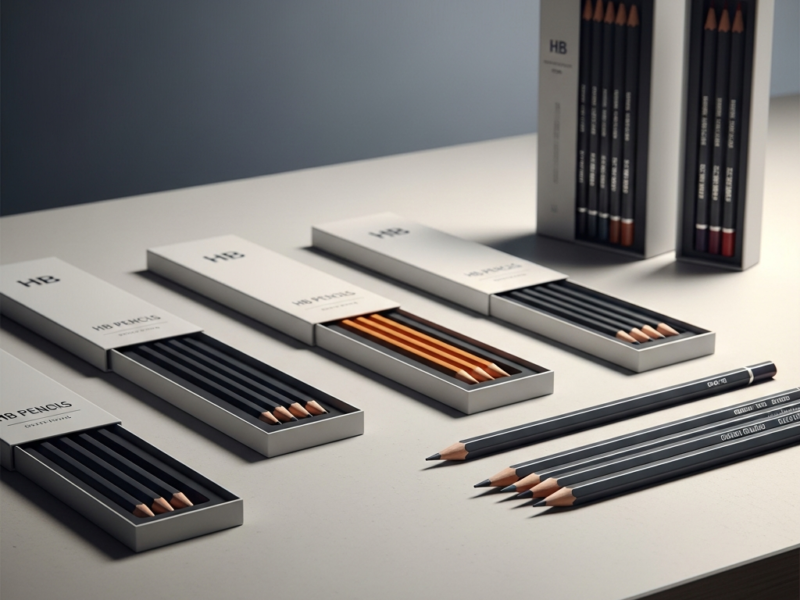
The discerning European market, known for its rigorous standards and sophisticated buyers, presents both immense opportunity and significant challenge for stationery manufacturers. Navigating this landscape effectively hinges on a fundamental yet often underestimated step: the meticulous evaluation of product samples. For any producer aiming to establish a strong foothold, particularly in the competitive pencil sector, understanding the critical role of sample evaluation pencils is paramount; these aren’t just prototypes, but crucial touchstones that build trust, ensure compliance, and pave the way for successful bulk orders.
The Strategic Imperative of Sample Evaluation Pencils for European Markets
In the high-stakes world of B2B procurement, especially when engaging with European buyers, the initial sample often dictates the trajectory of a potential partnership. These sophisticated buyers operate within a complex decision-making environment, characterized by large buying groups and increasingly compressed evaluation timelines. This dynamic, as highlighted by analyses of the European B2B buying journey, places immense pressure on suppliers to demonstrate value and reliability efficiently from the outset. For a product like pencils, where tactile quality, performance consistency, and aesthetic appeal are crucial, a well-executed sample isn’t just a courtesy; it’s a strategic imperative.
The act of providing and testing samples serves as the foundational step in product development and market entry, mirroring processes observed in other sensitive product categories like natural food additives. Suppliers must engage collaboratively with potential customers during this phase, treating it as an iterative process to fine-tune offerings based on direct feedback and stringent regulatory expectations. This approach not only mitigates the substantial risks associated with large-scale production but also cultivates trust and ensures alignment with the buyer’s precise specifications. The European buyer’s perspective on quality and customization, even at the sample stage, becomes a competitive advantage for manufacturers who truly understand and embrace this collaborative spirit. Therefore, merely sending a sample is insufficient; the true value lies in how that sample evaluation pencil is used to drive refinement and meet exacting market demands.
Crafting Precision: What Makes a Sample Evaluation Pencil Truly Effective?
When it comes to stationery, particularly pencils, evaluation extends far beyond mere appearance. A truly effective sample evaluation pencil embodies a suite of characteristics that speak directly to its intended use, market positioning, and ultimately, its value proposition. Buyers scrutinize factors like lead hardness, darkness (for graphite), color vibrancy (for color pencils), point strength, erase-ability, wood quality, lacquer finish durability, ferrule crimping integrity, and ergonomic design. Each attribute must align perfectly with the buyer’s vision and the end-user’s expectations.
The process of sample evaluation is, by its very nature, a collaborative feedback loop. Manufacturers must actively seek and incorporate detailed insights from buyers, understanding that refinement is an ongoing journey. For instance, a European buyer might provide feedback on a pencil’s balance for extended writing, the precise shade of blue for an artistic set, or the resistance of the lead to breakage under pressure. This iterative refinement process, where initial samples are adjusted and re-sent based on direct input, is what differentiates a merely acceptable supplier from a truly invaluable partner. It’s about demonstrating a commitment to excellence and a deep understanding of the nuanced factors that define product quality in the European stationery market. The goal is to ensure that the final product, whether a specialized drawing pencil or a mass-market writing tool, consistently performs to the highest standards, every single time.
The Foundation: Rigorous Raw Material Quality Control for Pencils
The integrity of a finished pencil, especially those presented as sample evaluation pencils, is inextricably linked to the quality of its foundational raw materials. Just as robust quality control is critical for food importers ensuring product safety and operational efficiency, it is equally paramount for pencil manufacturers. The quality of every accepted batch of graphite, clay, wood, lacquer, or ferrule material directly impacts the overall production cycle’s effectiveness and the final product’s performance and safety. Adherence to internationally recognized standards is not merely a compliance issue; it’s a fundamental driver of business reputation and consumer trust.
A systematic approach to assessing raw materials involves thorough inspection, testing, and meticulous documentation to prevent contamination, adulteration, and inconsistencies. For example, incoming graphite must be tested for purity, particle size distribution, and binding properties, as these directly influence lead strength and smoothness. Wood must be assessed for species, grain consistency, moisture content, and freedom from defects that could compromise sharpening or structural integrity. Lacquers and finishes require testing for color accuracy, adhesion, and compliance with safety regulations, especially for children’s products. Suppliers must establish clear specifications with their raw material providers, implement rigorous inspection protocols upon delivery, and maintain comprehensive records for complete traceability. This proactive stance on quality control for incoming batches is indispensable for mitigating risks, avoiding costly recalls, and building a resilient and reliable pencil manufacturing operation.
Crucially, the concept of representative sampling for bulk materials is the bedrock for informed decision-making. As experts emphasize, a truly representative sample accurately reflects the characteristics of the entire bulk material, making the data derived from it reliable and actionable. Without representativeness, analytical results can be misleading, leading to flawed decisions in quality control, process optimization, and compliance. This means that when a manufacturer receives a shipment of graphite or wood, the samples taken for testing must accurately represent the entire batch. This scientific necessity avoids the pitfalls of non-representative data, which could result in significant financial losses, product quality issues, or even regulatory non-compliance if the materials used in the sample evaluation pencils do not accurately reflect the bulk production. Investing in robust sampling procedures for all raw materials is fundamental for driving better quality assurance, waste reduction, and overall operational excellence.
Table: Key Quality Control Points for Pencil Components
| Pencil Component | Key Quality Control Points | Impact on Sample Evaluation Pencils |
|---|---|---|
| Graphite/Lead Core | Hardness (H, B, F scale), Smoothness, Purity, Strength (breakage resistance), Particle size, Consistency. | Writing experience, lead breakage, line darkness, ease of erasing, durability. |
| Wood Casing | Species (e.g., Cedar, Basswood), Grain consistency, Moisture content, Absence of knots/defects, Sharpening ease. | Sharpening quality, aesthetic appeal, structural integrity, tactile feel, splintering. |
| Lacquer/Finish | Color accuracy, Adhesion, Scratch resistance, Non-toxicity (especially for children’s pencils), Uniformity, Gloss/Matte level. | Visual appeal, durability, safety compliance, ergonomic grip. |
| Ferrule | Metal type (e.g., Aluminum), Crimp strength, Corrosion resistance, Finish (e.g., polished, matte), Fit with wood/eraser. | Eraser security, structural stability, overall aesthetic, safety. |
| Eraser | Material composition (e.g., synthetic rubber), Erasing effectiveness (smudge-free), Durability, Non-abrasiveness, Color consistency. | Functional performance, residue levels, paper damage, longevity. |
| Adhesives | Bonding strength (wood to lead, ferrule to wood), Curing time, Non-toxicity. | Lead security within casing, pencil integrity, safety. |
Navigating European Compliance and Traceability with Sample Batches
Operating within the European market demands strict adherence to a complex web of regulations, which extends even to the components of a seemingly simple product like a pencil. From environmental sustainability to chemical safety, the provenance and composition of raw materials are under intense scrutiny. For pencil manufacturers, this means demonstrating robust traceability, especially concerning
Related Reading
- Pencil Smoothness Test: How to Evaluate Quality Purchases
- The Importance of Pre-Shipment Sample Pencils for Quality
- Pencil Durability Test: Ensuring Quality in Writing Tools
- Managing Seasonal Demand for Pencils in Europe
- Importance of EN71-3 Heavy Metals Testing for Pencils
- Requesting QC Reports for OEM Pencil Imports
- Pencil Sharpening Test Method Used in Factories
- Sample QC Checklist Pencils Importers Must Follow