
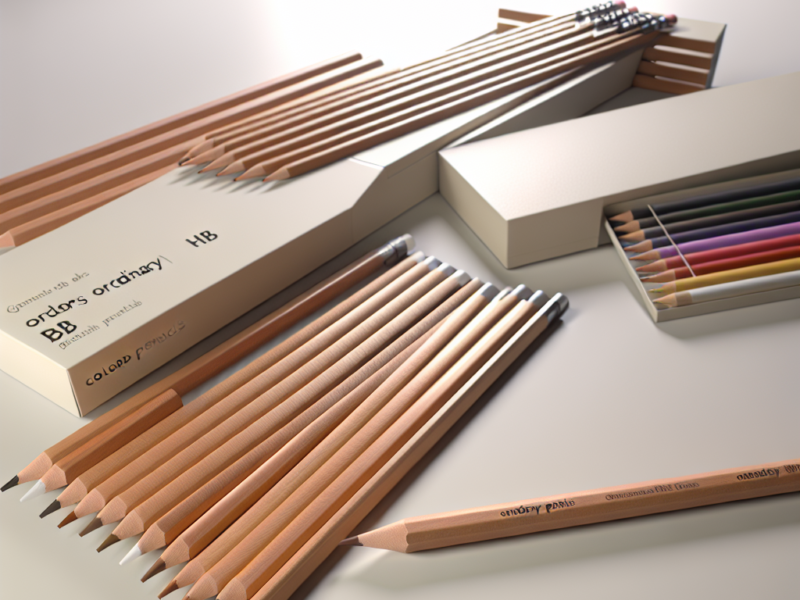
When it comes to Original Equipment Manufacturer (OEM) pencil production, precision is everything. Among the most critical components in this process are pencil slats—the rectangular wooden blanks that form the body of a pencil. For manufacturers, understanding the essential slat dimensions pencils require is not just a matter of standardization, but a strategic necessity that influences quality control, assembly efficiency, and overall product consistency. Whether you’re sourcing slats, designing automated equipment, or managing supply chains, mastering these dimensions is key to optimizing your pencil manufacturing workflow.
Why Pencil Slat Dimensions Matter in OEM Manufacturing
In pencil production, slats serve as the foundational material into which graphite cores are embedded and later formed into finished pencils. The dimensions of these slats must align precisely with the machinery used in mass production. Deviations, even by a few millimeters, can result in misaligned cores, poor bonding, or even complete production halts. As highlighted by ATJ Stationery, uniformity in slat dimensions ensures seamless integration into automated processing systems, reducing waste and maintaining high-quality standards throughout the production cycle.
Standard Slat Dimensions Used in Pencil Manufacturing
While there are variations depending on the pencil type and regional standards, most OEM projects adhere to a set of widely accepted slat dimensions. These measurements are not arbitrary—they are the result of decades of optimization for compatibility with standard pencil sizes and production equipment.
| Dimension | Standard Range | Purpose |
|---|---|---|
| Length | 185 mm – 190 mm | Matches typical pencil length after trimming |
| Width | 73 mm – 76 mm | Allows cutting of up to 10 pencils per slat |
| Thickness | 5.2 mm – 5.5 mm | Accommodates core diameter and casing |
These specifications are confirmed by industry leaders like Durzer DPencil, who emphasize that staying within these ranges ensures compatibility across standard production lines. The width and thickness, in particular, are optimized to accommodate grooves and cores without compromising structural integrity.
Dimensional Tolerances and Their Impact
Even with standard dimensions in place, tolerances play a crucial role. These are the allowable deviations in measurements that still permit a slat to function properly in production. For example, a slat thickness tolerance of ±0.1 mm may seem minor, but in high-speed manufacturing, it can mean the difference between a smooth assembly and a jammed machine.
According to Hongzintai, slats are often kiln-dried and precisely milled to maintain these tolerances, ensuring uniformity across batches. This attention to detail is particularly important in OEM settings, where slats from different suppliers may be used interchangeably.
Grooving and Its Role in Slat Design
Aside from basic dimensions, slats are also grooved to hold the pencil core securely. These grooves are typically milled into the slat at a depth of 2 mm to 2.5 mm, depending on the core diameter. The groove pattern must align perfectly with the core to ensure proper bonding during gluing and casing.
ATJ Stationery notes that the precision of these grooves directly affects core alignment and adhesion. Poorly milled grooves can lead to off-center cores, which not only affect writing performance but also weaken the pencil structurally. For OEM projects, this means that slat suppliers must maintain strict quality control not just in overall dimensions, but in groove geometry as well.
Types of Pencil Slats and Their Applications
Not all slats are created equal. Depending on the application, manufacturers may choose from several types of slats, each with unique dimensional and material characteristics. Here’s a breakdown:
| Slat Type | Description | Common Use |
|---|---|---|
| Full Ply | Standard, defect-free slats with full dimensions | Premium pencils, OEM mass production |
| Narrow Ply | Reduced width, may include minor defects | Budget pencils, internal use |
| Memos | Shorter slats, often cut from leftover material | Promotional or novelty pencils |
As explained by Pencils.com, selecting the appropriate slat type is a key decision in the manufacturing process. Full ply slats offer the best consistency and are preferred for high-end or export-grade pencils. Narrow ply and memos may be suitable for lower-cost or specialized applications but require adjustments in machinery and quality expectations.
Wood Selection and Dimensional Stability
The type of wood used for slats also influences how well they maintain their dimensions over time. Common woods include incense cedar, basswood, and jelutong—each chosen for their machinability and resistance to warping. These woods are typically kiln-dried to reduce moisture content to around 6–8%, which helps prevent dimensional changes during storage and production.
As highlighted by Interwell, the drying and conditioning process is essential for achieving consistent slat dimensions. Improperly dried wood can swell or shrink, leading to misalignment in automated systems. For OEM projects, sourcing slats from suppliers who follow rigorous drying protocols is non-negotiable.
OEM Workflow: From Slat to Finished Pencil
Understanding how slat dimensions fit into the larger OEM workflow helps clarify why precision is so critical. Here’s a simplified overview of the process:
- Slat Preparation: Logs are cut, kiln-dried, and milled into slats with precise dimensions.
- Grooving: Each slat is grooved to accommodate the pencil core.
- Core Placement: Graphite or color cores are laid into the grooves.
- Bonding: A second slat is glued on top, forming a “sandwich.”
- Shaping: The bonded slats are cut into individual pencils and shaped (hexagonal, round, etc.).
- Finishing: Pencils are painted, stamped, and fitted with erasers if applicable.
Each of these steps depends on the initial slat being dimensionally accurate. A slat that is too thick may not bond properly; one that is too thin could break during shaping. In OEM environments where thousands of pencils are produced daily, these small errors can scale into significant losses.
Quality Control and Inspection Protocols
To maintain dimensional accuracy, OEM manufacturers implement strict quality control protocols. These typically include:
- Caliper measurements at multiple points on each slat
- Visual inspections for warping, cracks, and knots
- Moisture content testing using hygrometers
- Groove depth verification using profile gauges
These inspections are often performed both at the slat supplier’s facility and upon arrival at the manufacturing plant. This dual-layered approach ensures that only slats meeting dimensional and material specifications enter the production line.
Challenges in Global OEM Supply Chains
OEM pencil manufacturing often involves sourcing slats from international suppliers. This introduces challenges such as dimensional variation due to humidity changes during shipping, differences in regional measurement standards, and inconsistent quality control practices. To mitigate these issues, many OEMs establish long-term partnerships with trusted suppliers and require batch testing before shipment.
Some manufacturers also invest in local machining capabilities to re-mill slats that arrive slightly out of spec. While this adds cost, it provides flexibility and helps maintain production schedules.
Future Trends: Automation and Digital Precision
As automation continues to evolve, the tolerances for slat dimensions are becoming even tighter. Advanced CNC grooving machines and robotic assembly lines require slats that conform to exacting standards. Some OEMs are now integrating digital scanning systems to inspect slats in real time, flagging any deviations before they reach the production floor.
This trend underscores the growing importance of data-driven manufacturing. Slat suppliers who can provide digital measurement logs and traceable quality certifications will be better positioned in the evolving OEM landscape.
Conclusion: Precision is the Foundation of Pencil Quality
In the world of OEM pencil production, slat dimensions are far more than just numbers on a spec sheet—they are the blueprint for efficiency, quality, and consistency. From the initial cut of wood to the final assembly of a pencil, every step relies on the slat being precisely engineered. By understanding and controlling these dimensions, manufacturers can streamline operations, reduce waste, and deliver a superior product to market. Whether you’re a supplier, engineer, or production manager, mastering the art and science of slat dimensions pencils require is essential for success in this highly specialized industry.
Related Reading
- Pencil Slats Manufacturing: A Comprehensive Guide
- Material Sourcing Pencils: Essential Guide for OEM Buyers
- Importance of EN71-3 Heavy Metals Testing for Pencils
- Pencil Casing Thickness: Key Insights for Artists
- Understanding Artist Pigment Load in Pencils
- Prevent Color Migration in Pencil Coating Processes
- Advantages of Direct OEM Pencils for Brand Owners
- Basswood vs Poplar: Key Factors for Importers