
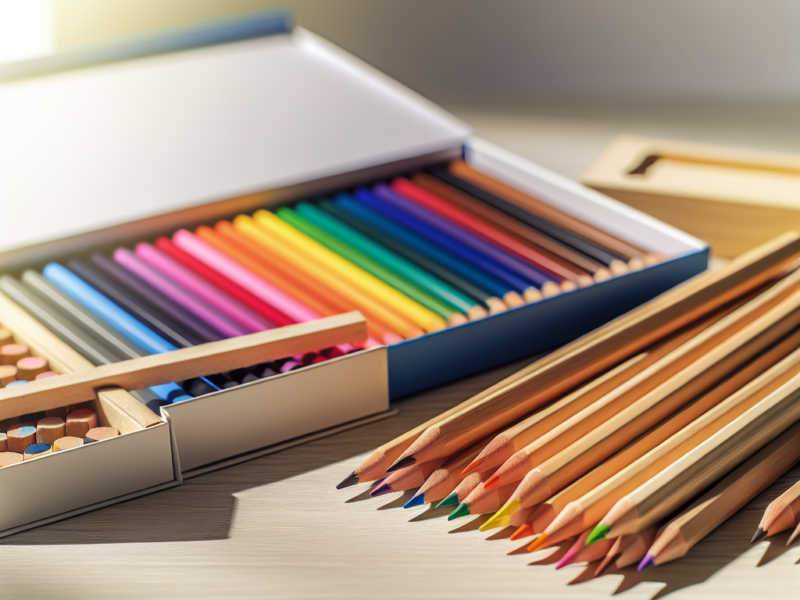
When it comes to colored pencils, few factors influence the drawing experience as profoundly as the pencil’s binder composition—specifically, the presence of wax. Whether you’re a seasoned illustrator, a casual sketcher, or a product developer in the stationery industry, understanding how wax content affects pencil smoothness can dramatically enhance your technique, product selection, or manufacturing process. The wax pencil smoothness relationship is not just a matter of feel—it’s a foundational element that determines how color is applied, how layers interact, and how a finished piece looks and performs over time.
What Is Wax in Colored Pencils?
Colored pencils are composed of three primary elements: pigment, binder, and additives. The binder is the substance that holds the pigment particles together and allows them to adhere to paper. In wax-based colored pencils, this binder is typically a blend of natural or synthetic waxes, such as beeswax, paraffin, or microcrystalline wax. These waxes give the pencil its signature softness and glide, which directly contributes to its smoothness during application.
Unlike graphite pencils, where clay and graphite dominate the formulation, colored pencils rely heavily on the binder to control texture and performance. The higher the wax content, the smoother and creamier the application tends to be. This characteristic is especially prized by artists who employ techniques like blending, layering, and burnishing.
How Wax Affects Pencil Smoothness
The tactile sensation of drawing with a wax-based pencil is markedly different from other types. Wax softens under the friction of drawing, creating a semi-melted effect that allows pigment to flow more effortlessly onto the paper. This melting action reduces resistance, enabling strokes to feel more fluid and less scratchy. The result is a smoother, more enjoyable drawing experience, especially on textured paper surfaces.
This smoothness isn’t just a luxury—it’s a functional advantage. For instance, when layering colors, wax-based pencils allow for more seamless transitions between hues. This is particularly useful in portraiture, landscapes, and any artwork requiring subtle gradients or realistic shading.
Wax vs. Oil: A Technical Comparison
To truly appreciate the role of wax in pencil smoothness, it’s helpful to compare wax-based pencils to their oil-based counterparts. While both use pigment and binders, the binder in oil-based pencils typically includes vegetable oils or synthetic polymers, which behave differently under pressure and friction.
| Feature | Wax-Based Pencils | Oil-Based Pencils |
|---|---|---|
| Smoothness | High; soft and creamy application | Moderate; firmer and more controlled |
| Blending | Excellent; easy to layer and burnish | Good; requires more pressure or solvents |
| Durability | Prone to “wax bloom” over time | More stable; less prone to surface changes |
| Color Vibrancy | Very vibrant; rich saturation | Moderately vibrant; more muted tones |
| Sharpening | More breakage due to softness | Holds a point longer; less breakage |
As the table shows, wax-based pencils generally offer superior smoothness and blending capabilities, making them ideal for expressive, painterly techniques. However, they come with trade-offs, such as a higher risk of tip breakage and the potential for a phenomenon known as wax bloom—a whitish film that can form on the artwork over time.
Understanding Wax Bloom and Its Mitigation
One downside of high wax content is the formation of wax bloom. This occurs when excess wax rises to the surface of the drawing, creating a cloudy or dull finish. While this doesn’t damage the artwork, it can obscure color vibrancy and detail. Fortunately, wax bloom is easily managed with a soft cloth or tissue. Some artists also apply fixatives to prevent it from recurring.
From a manufacturing perspective, controlling the ratio of wax to pigment and other binders is essential. Using harder waxes or blending them with stabilizers can reduce bloom while preserving smoothness. For OEM pencil producers, this is a key formulation challenge that directly affects product quality and user satisfaction.
Why Artists Prefer Wax for Smooth Techniques
Artists who prioritize blending, shading, and color layering often gravitate toward wax-based pencils because of their intuitive, forgiving nature. The smoothness of application allows for subtle transitions and rich textural effects that are harder to achieve with oil-based alternatives.
For example, in burnishing—a technique where heavy pressure is used to blend layers into a polished finish—wax-based pencils excel. The wax melts slightly under pressure, allowing pigments to fuse and fill the tooth of the paper completely. This results in a glossy, painterly surface that resembles oil painting or pastels.
Additionally, wax-based pencils are more accessible for beginners due to their ease of use. The smooth glide reduces hand fatigue and allows for quicker coverage, which can be motivating for new artists building confidence.
Composition Matters: Wax Types and Their Effects
Not all waxes are created equal. The specific type and blend of wax used in a pencil formulation can significantly affect its smoothness, hardness, and color payoff. Common waxes include:
- Beeswax: Natural, soft, and pliable; excellent for smooth blending.
- Paraffin: A petroleum-derived wax that offers consistent softness and stability.
- Microcrystalline Wax: Adds flexibility and helps reduce wax bloom.
- Carnauba Wax: Harder and more durable; often used to balance softer waxes.
By adjusting these waxes in the formulation, manufacturers can fine-tune the pencil’s performance. For example, a blend of beeswax and microcrystalline wax might yield a pencil that is both smooth and resistant to bloom, offering the best of both worlds.
Applications Beyond Art: Industrial and Educational Uses
While artists are the primary users of wax-based colored pencils, their smoothness also makes them ideal for other applications. In education, soft wax pencils are favored for young children who need tools that glide easily without requiring much pressure. The tactile feedback encourages motor skill development and creative exploration.
In industrial settings, wax pencils—often referred to as grease pencils or china markers—are used for marking on slick surfaces like glass, metal, or plastic. The smoothness and visibility of wax-based marks make them invaluable in manufacturing, shipping, and construction workflows.
OEM Considerations: Formulating for Smoothness
For OEM manufacturers and private-label brands, achieving the right balance of wax content is both an art and a science. Too much wax can lead to excessive softness, breakage, or bloom. Too little, and the pencil loses its smooth application and blending ability. Key formulation factors include:
- Binder-to-pigment ratio: Determines color intensity and texture.
- Wax blend selection: Impacts smoothness, durability, and finish.
- Additive use: Stabilizers and lubricants can enhance glide and reduce bloom.
- Core diameter: Thicker cores allow more wax and pigment, improving coverage and smoothness.
Manufacturers must also consider sharpening performance, shelf life, and user feedback when designing smooth wax-based pencils. Testing across various paper types and climates is crucial to ensure consistent performance.
Tips for Artists Using Wax-Based Pencils
To make the most of your wax-based pencils, consider the following techniques:
- Use textured paper to hold more pigment and enhance blending.
- Apply light layers to build up color gradually without wax buildup.
- Use a colorless blender or burnishing pencil to smooth transitions.
- Store your artwork flat and cover it with a fixative to prevent wax bloom.
These tips help maintain the integrity of your artwork and take full advantage of the pencil’s natural smoothness.
Conclusion: Why Wax Content Matters
The role of wax in colored pencils goes far beyond mere composition—it shapes the entire drawing experience. From the smooth glide across paper to the ease of blending and layering, wax is the unsung hero behind many artists’ most expressive works. Whether you’re choosing tools for your next sketch or formulating pencils for a global market, understanding the impact of wax on pencil smoothness is essential.
For further reading on this topic, explore these expert resources:
- Why Wax Content Influences Colored Pencil Smoothness
- Colored Pencil Comparison: Wax-Based or Oil-Based
- Should I Use Wax or Oil-Based Colored Pencils?
- Oil-Based vs Wax-Based Colour Pencils
Ultimately, the smoothness of a wax pencil is not just a feature—it’s a result of deliberate engineering, material science, and artistic intuition. By mastering this aspect, both users and creators can unlock the full potential of colored pencil art.
Related Reading
- How Wax-Based Colored Pencils Affect Your Artwork
- EN71-Approved Materials for Safe Pencils and Art Supplies
- Essential Guide to Varnish Pencil Coating Types
- Why Pigment Strength Matters in Colored Pencils
- Enhancing Graphite Flow Smoothness for Better Drawing
- Technical Drawing Pencils Guide to Grading and Hardness