
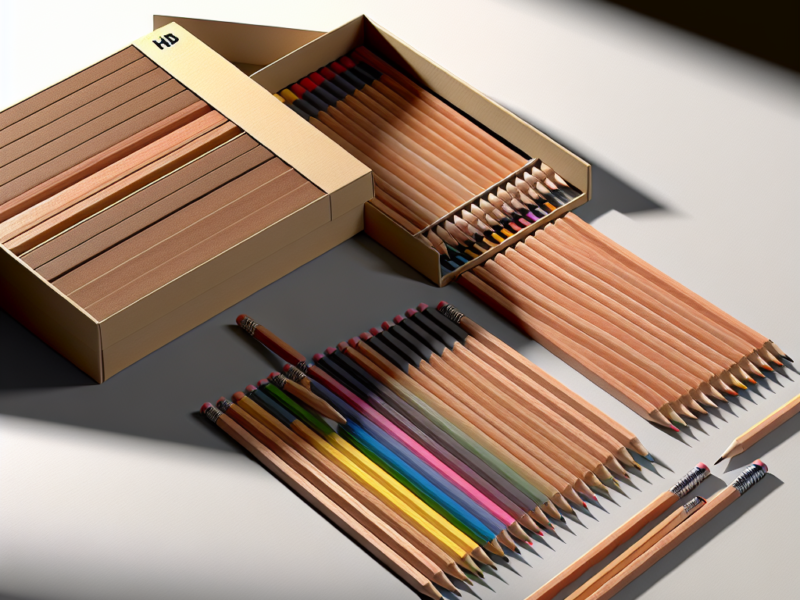
In the world of writing instruments, few tools are as universally recognized and relied upon as the humble pencil. Whether used in classrooms, architectural studios, or manufacturing facilities, the durability of a pencil directly impacts its performance and user satisfaction. Conducting a pencil durability test is not just a matter of quality control—it’s a crucial step in ensuring that each pencil meets the rigorous demands of its intended environment. From barrel integrity to lead hardness, these tests reveal the hidden mechanics behind a tool that seems deceptively simple.
Why Pencil Durability Matters
Durability in pencils goes far beyond preventing breakage during writing. For students, a pencil that easily snaps can disrupt learning. For artists or engineers, inconsistent performance can affect precision and outcomes. In manufacturing, pencil durability is a benchmark of quality assurance, directly influencing customer retention and brand reputation. Ensuring a pencil can withstand pressure, impact, and extended use requires a combination of design intelligence and rigorous testing protocols.
Core Components of Pencil Durability
Pencil durability is typically assessed through two primary areas: barrel strength and lead (or graphite) hardness. While the exterior must resist cracking and warping, the interior core must maintain structural integrity under pressure. Let’s explore how manufacturers evaluate these components.
Barrel Strength Testing
According to DurzerdPencil, barrel strength testing starts with sampling pencils from each production batch. These samples undergo both visual and mechanical evaluations to identify potential flaws.
- Visual Inspection: Pencils are examined for cracks, uneven finishes, warping, or discoloration. These defects often indicate issues in the drying or lacquering process.
- Flexural Testing: A mechanical stress test applies pressure to the pencil’s midpoint to measure resistance to bending or snapping.
- Drop Test: Pencils are dropped from a standardized height onto a hard surface to simulate real-world handling. Damage to the barrel or internal lead indicates poor structural integrity.
These tests help manufacturers fine-tune their raw material selection, gluing methods, and drying times. For example, using high-quality cedar or basswood can significantly improve barrel resilience without adding weight.
Lead Hardness and Break Resistance
The internal core—commonly referred to as the “lead”—is actually made of a graphite-clay mixture. Its composition determines both the writing quality and break resistance. The industry-standard method for evaluating this is the ASTM D3363 pencil hardness test, widely used in coatings and surface durability assessments.
Understanding the ASTM D3363 Pencil Hardness Test
As outlined by Applied Technical Services, the ASTM D3363 test categorizes pencil cores from softest (9B) to hardest (9H). This test is particularly valuable not only for pencil manufacturers but also for evaluating the scratch resistance of coatings in other industries.
| Grade | Description | Typical Use |
|---|---|---|
| 9B–6B | Very soft, dark marks | Artistic sketching, shading |
| 5B–2B | Soft, smooth writing | General writing, drawing |
| HB–H | Balanced hardness | School, office use |
| 2H–9H | Hard, light marks | Technical drawing, fine lines |
The test involves pressing a pencil at a fixed angle (usually 45 degrees) with consistent pressure against a coated surface. The hardest pencil that doesn’t scratch the surface determines the coating’s hardness rating. In pencil manufacturing, similar principles are applied to ensure the core resists breakage under writing pressure.
Step-by-Step: Pencil Hardness Testing Procedure
According to Tekra’s white paper, the pencil hardness test requires precision and consistency. Here’s a simplified workflow adapted for pencil durability testing:
- Prepare the Surface: Use a clean, flat writing surface for consistency.
- Sharpen the Pencil: Ensure the core is exposed evenly, with a flat, chisel-like tip.
- Set the Angle: Hold the pencil at a 45-degree angle to the surface.
- Apply Force: Use a fixed weight or manual pressure to draw a 6.5 mm line.
- Inspect the Mark: Check for scratches, smudges, or core breakage.
This method ensures repeatability across batches and provides a quantifiable metric for lead durability. The goal is to find the optimal balance—hard enough to resist breakage, yet soft enough for smooth writing.
Material Considerations in Pencil Durability
Material choice plays a pivotal role in the outcome of any pencil durability test. Let’s break down the primary materials used and their impact on performance:
| Component | Material | Durability Impact |
|---|---|---|
| Barrel | Cedar, Basswood, Recycled Wood | Determines flexibility and resistance to cracking |
| Core | Graphite + Clay Mixture | Affects hardness, smoothness, and break resistance |
| Coating | Water-based or Oil-based Lacquer | Protects against moisture, enhances grip |
| Ferrule | Aluminum or Brass | Secures eraser; may influence balance |
| Eraser | Rubber, Vinyl, or Thermoplastic | Durability affects usability over time |
Using premium materials not only improves test outcomes but also enhances the user experience. For instance, cedar is preferred for its straight grain and ease of sharpening, while high-quality graphite ensures consistent line density and minimal breakage.
Pros and Cons of Pencil Durability Testing
While essential, durability testing comes with its own set of advantages and challenges:
- Pros:
- Ensures product consistency across batches
- Reduces customer complaints and returns
- Supports compliance with international standards
- Enhances brand reputation through quality assurance
- Cons:
- Requires specialized equipment and trained personnel
- Can increase production costs and lead times
- May result in waste from destructive testing methods
Industry Applications Beyond Writing
Interestingly, the principles of pencil durability testing extend into other industries. As noted by Impactinator® Glass, pencil hardness tests are widely used to assess the scratch resistance of coatings on glass, plastics, and metals. This crossover highlights the versatility and reliability of pencil-based testing methods in quality control and product development.
Quality Assurance Workflow in Pencil Manufacturing
For manufacturers, integrating durability testing into the production line is crucial. A typical workflow might look like this:
- Raw Material Inspection: Verify wood grain, graphite composition, and lacquer quality.
- Mid-Production Sampling: Conduct barrel and core tests during assembly stages.
- Post-Production Testing: Apply drop tests, flexural tests, and hardness evaluations.
- Batch Certification: Document results and certify batches meeting internal standards.
- Continuous Improvement: Use test data to refine materials and processes.
This structured approach minimizes variability and ensures that every pencil delivered to market performs reliably under real-world conditions.
Conclusion: Raising the Standard for Everyday Tools
Though often overlooked, the pencil is a marvel of engineering and design. The rigorous application of pencil durability test methods ensures that this everyday tool continues to meet the high expectations of users across disciplines. From the classroom to the design studio, a durable pencil is not just a convenience—it’s a necessity. By understanding and implementing standardized testing protocols, manufacturers can uphold quality, inspire trust, and contribute to the timeless legacy of the pencil.