
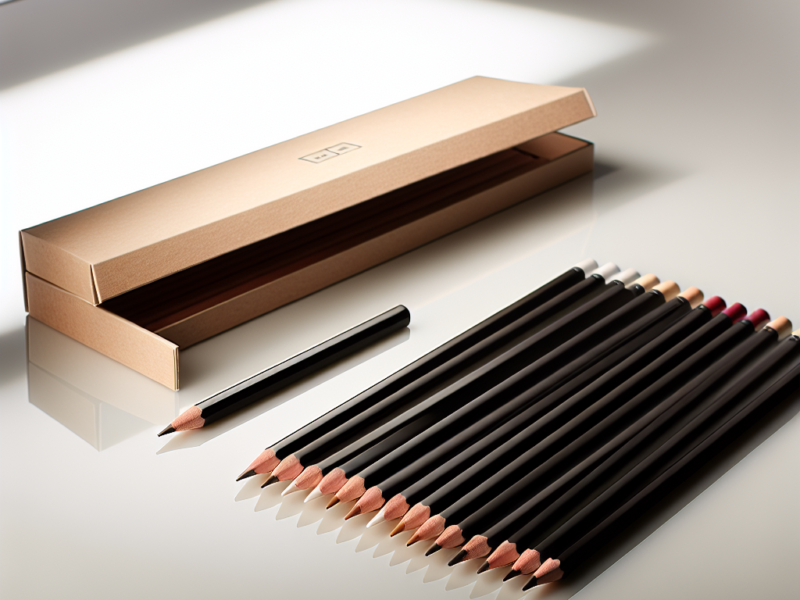
In the world of pencil manufacturing, quality isn’t just about the wood or the graphite core—it’s also about how well a pencil sharpens. Whether you’re an OEM supplier, a stationery brand, or a quality control engineer, understanding the pencil sharpening test method used in factories is essential. Sharpening performance directly affects the end-user’s experience, and manufacturers go to great lengths to ensure consistency, safety, and durability through controlled testing protocols.
Why Sharpening Matters in Pencil Manufacturing
To the average consumer, a pencil is a simple tool. But for manufacturers, it’s a precision product. A pencil that doesn’t sharpen properly can cause frustration, waste, and even damage to sharpeners. Poor sharpening behavior may result from inconsistencies in wood density, graphite alignment, or bonding processes. That’s why factories implement rigorous sharpening tests to evaluate performance across product batches.
Sharpening performance is a key metric in quality assurance. It affects:
- Customer satisfaction and usability
- Compatibility with common sharpeners
- Breakage rates of the graphite core
- Safety during sharpening (e.g., splintering wood)
Overview of Pencil Sharpening Test Methods
Factories typically rely on a combination of manual and mechanical tests to evaluate sharpening quality. These processes are standardized to ensure repeatable results across manufacturing lines and product lines.
1. Manual Sharpening Evaluation
This is the most traditional method and still widely used in quality control labs. A technician sharpens a pencil using standardized sharpeners under controlled conditions and records observations such as:
- Sharpness of the point
- Cleanliness of the cut (no splintering)
- Core centering and breakage
- Length of exposed graphite
While subjective, this method provides real-world feedback. It’s often used during early product development or to test new wood sources or bonding glues.
2. Mechanical Sharpening Test Rigs
To remove human variability, many factories use mechanical sharpening rigs. These machines simulate the sharpening process with consistent pressure, angle, and rotation speed. They can be programmed to mimic popular sharpener types (e.g., handheld, crank, or electric models).
Key benefits of mechanical testing:
- Repeatability across batches
- Data collection on torque, resistance, and wear
- Automated scoring of sharpening smoothness
Some rigs are even equipped with sensors to detect when the graphite breaks or when the blade encounters inconsistent wood density.
3. Edge Sharpness Testing Using Industrial Standards
Although edge sharpness testing is more common in knife and metal industries, the principles are increasingly being applied to stationery. According to Sharpening Supplies, the BESS (Brubacher Edge Sharpness Scale) system offers a quantifiable way to measure how sharp an edge is after processing. While BESS is designed for blades, its methodology can be adapted for evaluating pencil tips post-sharpening.
In this context, a pencil is sharpened and then tested for tip penetration using a soft medium (e.g., silicone rubber or calibrated card stock). The force required to puncture the medium provides a numeric value for sharpness. This is especially useful for premium pencil lines or art-grade graphite products, where tip precision is critical.
4. Material Resistance Testing (Inspired by Metal Fabrication)
Drawing from industrial practices in metalwork, such as those discussed in The Fabricator, some pencil manufacturers are experimenting with resistance-based testing. This involves measuring the force required for a sharpened pencil tip to penetrate a test medium under controlled conditions. The goal is to quantify:
- Tip durability
- Break resistance under pressure
- Sharpness retention after repeated use
These tests mirror those used in metal edge testing, where silicone rubber or calibrated cards are used to evaluate edge integrity. The same logic applies to pencil points—especially in technical drawing or drafting pencils where ultra-fine tips are required.
5. CATRA Razor Edge Sharpness Testing (Adapted for Pencil Tips)
The CATRA Razor Edge Sharpness Tester is a benchtop device originally designed for knife edge evaluation. It measures the cutting force needed to slice through a rubber test medium. While not originally intended for pencils, the underlying technology could be adapted to assess point sharpness and tip strength in high-end pencil lines.
Advantages of using CATRA-style equipment include:
- High precision and repeatability
- Quantitative data for R&D purposes
- Compact equipment suitable for lab environments
This type of testing is particularly relevant for manufacturers producing specialty pencils for artists, architects, or engineers who demand consistent performance from every sharpened point.
Sharpening Performance Workflow in a Pencil Factory
Below is a simplified version of the typical sharpening test workflow in a modern pencil manufacturing facility:
| Step | Description | Testing Tools |
|---|---|---|
| 1. Sample Selection | Random pencils pulled from production batch | Manual collection |
| 2. Pre-Sharpening Inspection | Check for core centering, wood defects | Microscope, calipers |
| 3. Sharpening Test | Manual or mechanical sharpening | Standard sharpeners, test rigs |
| 4. Tip Evaluation | Visual and tactile inspection of tip | Magnifying lens, BESS tester (optional) |
| 5. Resistance Testing | Penetration force measured | Silicone rubber, calibrated card |
| 6. Data Logging | Results recorded and compared to spec | Digital QA system |
Factors That Influence Sharpening Test Results
Several variables can skew sharpening performance, which is why factories carefully control these during testing:
- Wood Type: Basswood, cedar, and jelutong all behave differently under a blade.
- Blade Sharpness: A dull sharpener can falsely indicate poor pencil quality.
- Graphite Hardness: Softer leads are more prone to breakage during sharpening.
- Bonding Adhesive: The glue used to hold the graphite in place affects tip durability.
Pros and Cons of Common Testing Methods
| Method | Pros | Cons |
|---|---|---|
| Manual Sharpening | Simple, inexpensive, real-world feedback | Subjective, inconsistent |
| Mechanical Rigs | High repeatability, data-rich | Initial cost, maintenance |
| BESS Testing | Quantitative, standardized | Requires adaptation for pencils |
| CATRA Tester | Precision, lab-grade results | Not originally designed for pencils |
Conclusion: Precision Matters in Every Point
In today’s competitive stationery market, sharpening performance isn’t just a nice-to-have—it’s a must. The pencil sharpening test method used in factories plays a critical role in ensuring that every pencil meets the expectations of students, artists, and professionals alike. From manual testing to advanced edge-measurement tools like BESS and CATRA, manufacturers are investing in precision to deliver consistent quality.
As the industry evolves, we can expect even more integration of standardized, data-driven testing methods to ensure that every pencil sharpens smoothly, cleanly, and safely—no matter where it’s made.
Related Reading
- Pencil PSI Inspection Boosts Quality and Compliance
- Sample QC Checklist Pencils Importers Must Follow
- Pencil Barrel Strength QC Testing Explained
- Lead Alignment QC Process in Pencil Manufacturing
- Pencil Quality Testing for EN71 Compliance Standards
- Coating Thickness QC Methods for Precision Manufacturing
- Pencil Lifecycle Explained Through Full Manufacturing Process
- Why Schools Choose Pre-Sharpened School Pencils