
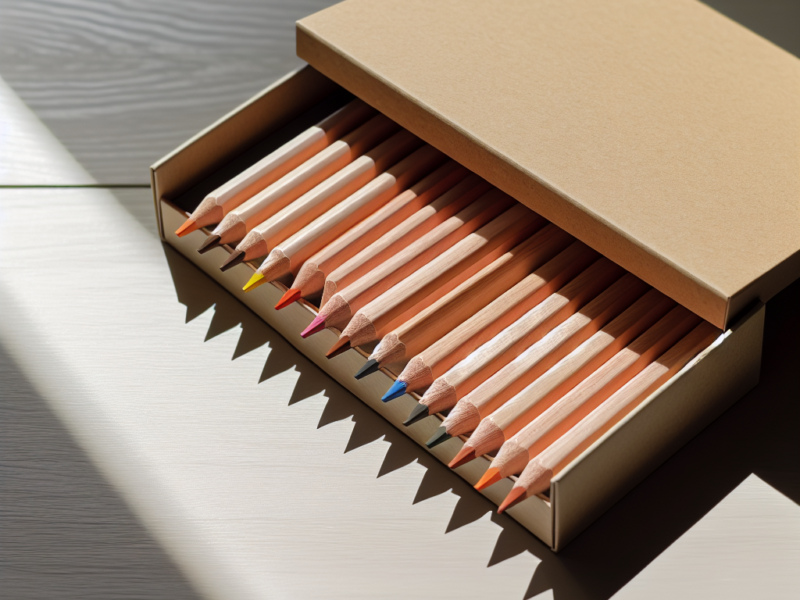
When importing pencils, ensuring consistent quality and compliance with international regulations is not just good practice—it’s essential. Whether you’re sourcing wooden graphite pencils, mechanical pencils, or colored art pencils, a detailed inspection plan can make or break your shipment. In this guide, we’ll walk you through a practical, expert-driven sample QC checklist pencils importers should follow to avoid costly delays, product rejections, and compliance issues.
Why Quality Control Matters in Pencil Imports
Quality control (QC) is more than just checking if the pencils write. It’s about verifying that the product meets buyer specifications, complies with safety standards, and is consistent across batches. With the rise of global sourcing—especially from manufacturers in China, Vietnam, and India—importers must take proactive steps to ensure their shipments meet expectations before they even leave the factory.
Skipping QC can lead to:
- Non-compliance with customs regulations
- Rejected shipments or customer returns
- Brand damage due to poor product quality
- Delays and additional costs in logistics
Let’s now explore what a comprehensive pencil QC checklist should include.
Pre-Shipment: The First Line of Defense
Before the shipment is packed, a pre-shipment inspection (PSI) ensures that the products meet your agreed specifications. This is where your checklist begins.
1. Visual Inspection
Start with a surface-level check:
- Are the pencils free from cracks, chips, or deformities?
- Is the paint or lacquer consistent and smooth?
- Are the branding and labeling accurate and legible?
2. Dimensional Accuracy
Use calipers or micrometers to verify:
- Length and diameter of pencils (typically 175mm x 7mm for standard wooden pencils)
- Lead centering (important for sharpenability and break resistance)
3. Core Hardness and Composition
Ensure the pencil core matches the grade (e.g., HB, 2B, etc.). A hardness tester or manual writing test can be used to confirm:
- Smudge resistance
- Line darkness
- Erasability
4. Sharpening Test
Test a sample of pencils with standard sharpeners:
- Does the wood sharpen evenly without splintering?
- Does the lead break during sharpening?
5. Packaging Inspection
Verify that packaging meets both retail and transit requirements:
- Correct quantity per box (e.g., 12 pcs, 144 pcs)
- Barcodes and product labels are accurate
- Packaging is sturdy and sealed properly
Material and Safety Compliance Checks
Especially for school and children’s pencils, safety compliance is non-negotiable. Your QC checklist must include a review of material certifications and lab test reports.
6. Material Verification
Request documentation for:
- Wood type (e.g., cedar, basswood, or recycled material)
- Paint composition (must be lead-free and non-toxic)
- Core materials (typically graphite and clay or wax for colored pencils)
7. Regulatory Compliance
Ensure the product complies with applicable standards such as:
- EN71 (Europe) for toy safety
- ASTM D4236 (USA) for art materials
- REACH and RoHS for chemical safety
For more on regulatory compliance, see this helpful guide from Hongzintai on pencil shipment customs clearance.
Sampling and AQL (Acceptable Quality Limit)
Define your sampling size and acceptable defect levels before inspection. Most importers follow the ISO 2859-1 standard for AQL sampling.
| Order Quantity | Sample Size | AQL Level (Critical / Major / Minor) |
|---|---|---|
| 1,201 – 3,200 pcs | 125 pcs | 0 / 2.5 / 4.0 |
| 3,201 – 10,000 pcs | 200 pcs | 0 / 2.5 / 4.0 |
| 10,001 – 35,000 pcs | 315 pcs | 0 / 2.5 / 4.0 |
Critical defects (e.g., broken cores, missing labels) are not acceptable. Major defects (e.g., poor sharpening) should be minimal, and minor defects (e.g., slight paint variation) may be tolerated within limits.
Customs and Documentation Review
Even if your pencils pass inspection, improper documentation can hold up your shipment. This is where many importers slip.
8. HS Code Confirmation
As of 2025, the correct HS code for pencils is 9609.10. This classification covers graphite pencils, colored pencils, and similar articles.
Stay updated with changes in harmonized tariff schedules. You can read more about the 2025 updates in this FreightAmigo HS code guide.
9. Correct Use of Entry Type
If you’re importing pencil samples for evaluation, consider using Entry Type 86 in the U.S. This allows shipments under $800 in value to enter duty-free under certain conditions.
For a breakdown of how to leverage this cost-saving strategy, see C.H. Robinson’s guide on commercial samples.
10. Required Documents
Ensure the following documents are prepared and accurate:
- Commercial invoice
- Packing list
- Certificate of origin
- Test reports (if applicable)
- Import licenses or permits (if required)
Post-Arrival Quality Assurance
Even after customs clearance, it’s wise to conduct a spot check upon arrival at your warehouse. This final step helps verify that no damage occurred in transit and that the shipment matches your inspection report.
11. Random Sample Testing
Select a few boxes at random and repeat basic checks:
- Quantity confirmation
- Packaging integrity
- Writing performance
12. Customer Feedback Loop
Track customer reviews and complaints to identify recurring quality issues. Feed this data back to your supplier and inspection agency to refine future QC strategies.
Conclusion: Build QC Into Your Supply Chain DNA
A detailed sample QC checklist pencils importers use isn’t just a one-time task—it’s a repeatable system that protects your brand, satisfies your customers, and keeps your operations compliant. From verifying dimensions and materials to navigating customs codes and entry types, every step matters.
As global trade and compliance standards evolve, staying informed and proactive is your best defense. Partnering with experienced inspection agencies, using digital customs tools, and maintaining rigorous documentation can help you scale your pencil import business with confidence.
For additional insights on shipping strategy and compliance, visit Hongzintai’s customs clearance guide.
Related Reading
- Pencil PSI Inspection Boosts Quality and Compliance
- Lead Alignment QC Process in Pencil Manufacturing
- Pencil Barrel Strength QC Testing Explained
- Coating Thickness QC Methods for Precision Manufacturing
- Pencil Quality Testing for EN71 Compliance Standards
- Pencil Coating Defects and QC Solutions Explained
- Pencil Production Line Explanation and Step-by-Step Process
- Pencil Sampling Tips for OEM Import Evaluation