
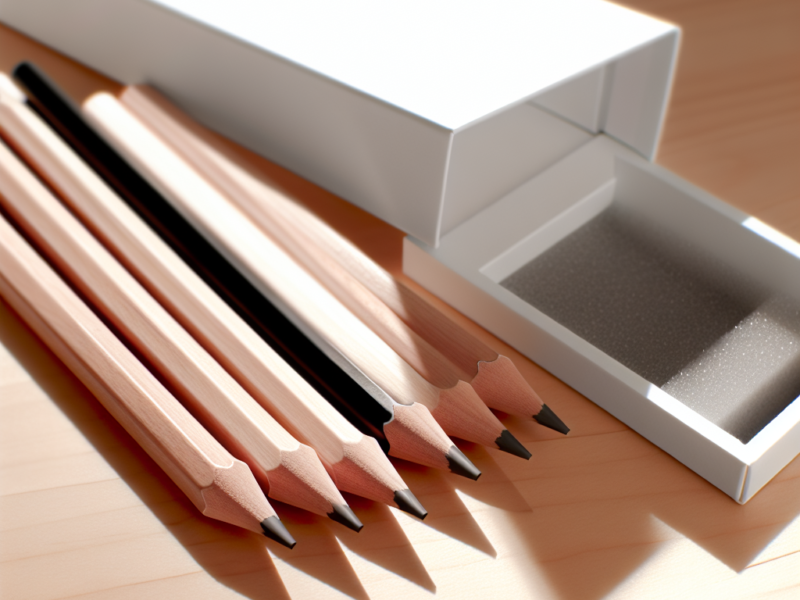
This in-depth guide explores the defining characteristics of premium graphite pencils, decoding the science behind pencil grades, materials, and manufacturing standards. Whether you’re sketching a portrait or drafting a blueprint, understanding these nuances will elevate your craft—and your expectations.
Understanding the Core: Graphite and Clay Ratios
At the heart of every graphite pencil lies a delicate balance of graphite and clay. This mixture determines not only how dark or light the pencil writes but also how it feels on the page.
Premium pencils use high-purity graphite and refined clay, carefully blended to achieve a consistent texture and performance. The ratio between these two materials defines the pencil’s grade on the graphite hardness scale, which ranges from hard (H) to soft (B).
As explained in Sophie Ploeg’s graphite pencil guide, more graphite in the mix results in a softer, darker mark (e.g., 6B), while more clay produces a harder, lighter line (e.g., 4H). Premium pencils maintain this balance with precise formulation, ensuring the grade on the label matches its real-world performance.
| Pencil Grade | Graphite Content | Clay Content | Line Darkness |
|---|---|---|---|
| 6B | High | Low | Very Dark |
| HB | Balanced | Balanced | Medium |
| 4H | Low | High | Light |
Premium pencils are not only consistent in grade but also smoother to use, thanks to the purity of materials and quality control during manufacturing. Inferior pencils often have gritty or scratchy cores due to impurities or uneven mixing.
Decoding Pencil Hardness: What the Grades Really Mean
The pencil hardness quality scale is central to choosing the right pencil for the task. This scale, often referred to as the HB grading system, includes 22 common grades ranging from 9H (hardest) to 9B (softest), with HB and F in the center.
According to Pencils.com’s graphite grading guide, each grade offers a specific benefit:
- H–9H: Best for technical drawing or fine lines. Harder tips retain sharpness longer but produce lighter marks.
- B–9B: Ideal for shading and expressive sketching. Softer cores create rich, dark lines but wear down faster.
- HB and F: Balanced for general writing and note-taking. HB is the standard for school and office use.
Premium brands ensure that their HB is truly centered—not too hard, not too soft—offering a reliable middle ground. In contrast, cheaper pencils may label a core as HB but deliver inconsistent results due to poor formulation or lax quality control.
Materials Beyond the Core: What Else Makes a Pencil Premium?
While the core is crucial, a premium graphite pencil is a sum of its parts. Every material element contributes to performance, durability, and user experience.
- Wood Casing: Premium pencils use cedar wood—typically California incense cedar—for its straight grain, softness, and ability to sharpen cleanly without splintering. Cheaper pencils often use basswood or recycled wood, which can break unevenly and dull blades faster.
- Lacquer Finish: A smooth, multi-layer lacquer not only enhances aesthetics but also protects the wood and improves grip. Premium pencils often feature a satin or matte finish for comfort during long use.
- Bonding Technique: High-end pencils use a process called SV (secure bonding) to glue the core to the wood along its entire length. This prevents breakage and ensures even sharpening.
- Ferrule and Eraser: In pencils that include erasers, premium models use high-quality rubber or vinyl erasers that don’t smear. The ferrule (metal band) is tightly crimped for durability.
Each of these components is selected and assembled with care in premium pencils, often by manufacturers with decades—or centuries—of experience in pencil craftsmanship.
Manufacturing Precision: Where Quality Is Engineered
Premium pencil production is as much about process as it is about materials. From core extrusion to barrel shaping and final inspection, every step is tightly controlled.
Brands like Faber-Castell, Staedtler, and Mitsubishi Hi-Uni are renowned for their manufacturing standards. Their factories employ rigorous testing for lead uniformity, break resistance, and sharpening behavior. For instance, Mitsubishi’s Hi-Uni line is known for its buttery-smooth cores and flawless wood casing, a result of meticulous Japanese engineering.
In contrast, mass-market pencils are often produced in high volumes with minimal quality control, leading to inconsistencies in core alignment, hardness, and finish.
Application Matters: Choosing the Right Grade for the Job
One of the defining traits of a premium graphite pencil is its suitability for specific tasks. For professionals, choosing the right grade isn’t optional—it’s essential.
As Mont Marte’s pencil grading article explains, the pencil you choose can dramatically affect the outcome of your work:
- Artists: Use a range from 6H to 8B for detailed sketches, shading, and texture. Softer pencils blend better, while harder ones are great for outlines and fine details.
- Architects and Engineers: Prefer H to 2H grades for precision and clean lines on drafting paper.
- Writers and Students: Stick with HB or F for legibility and comfort during extended writing sessions.
Premium pencils offer reliable grade integrity, which means you can trust that a 2B from one brand will behave similarly every time you pick it up—a critical factor in professional workflows.
How to Identify a Premium Graphite Pencil
So how can you tell if a pencil is truly premium? Here’s a quick checklist to help you evaluate:
- Core Consistency: Smooth, even lines without skipping or crumbling.
- Sharpening Behavior: Sharpens cleanly without splintering or breaking.
- Grade Accuracy: Matches expected hardness/darkness for its label.
- Finish Quality: Smooth lacquer, clear imprinting, and tight ferrule (if applicable).
- Brand Reputation: Produced by a known manufacturer with a history of quality (e.g., Tombow, Caran d’Ache, Blackwing).
While price is often a clue, some mid-range pencils like the Staedtler Mars Lumograph offer excellent quality at accessible prices. It’s less about cost and more about craftsmanship.
Premium vs. Standard: A Side-by-Side Comparison
| Feature | Premium Pencil | Standard Pencil |
|---|---|---|
| Core Composition | High-purity graphite and refined clay | Mixed-quality materials |
| Wood Casing | Incense cedar, straight grain | Basswood or recycled wood |
| Hardness Accuracy | Precisely matched to grade | Often inconsistent |
| Sharpening | Clean, smooth, splinter-free | Prone to breakage or rough edges |
| Feel on Paper | Smooth, controlled, consistent | Scratchy or uneven |
Conclusion: Elevating Your Tools, Elevating Your Work
A premium graphite pencil is more than a writing instrument—it’s a precision tool designed to meet the high standards of professionals and enthusiasts alike. From the carefully calibrated graphite-clay ratio to the craftsmanship of the casing, every detail contributes to performance, consistency, and user satisfaction.
Understanding pencil hardness quality helps you choose the right grade for your task, whether you’re sketching, drafting, or writing. And once you experience the difference a premium pencil makes, it’s hard to go back.
For further reading and technical breakdowns, explore these excellent resources:
Invest in the right pencil, and you invest in the quality of your work.
Related Reading
- Everything About Graphite Pencil Production for Global Distributors
- What Importers Should Know About Graphite Pencil Production for Wholesale Orders
- Ultimate Buyer Guide for Graphite Pencil Production for B2B Buyers
- How to Source Graphite Pencil Production for Australia Importers
- Complete Guide to Graphite Pencil Production for Retail Chains